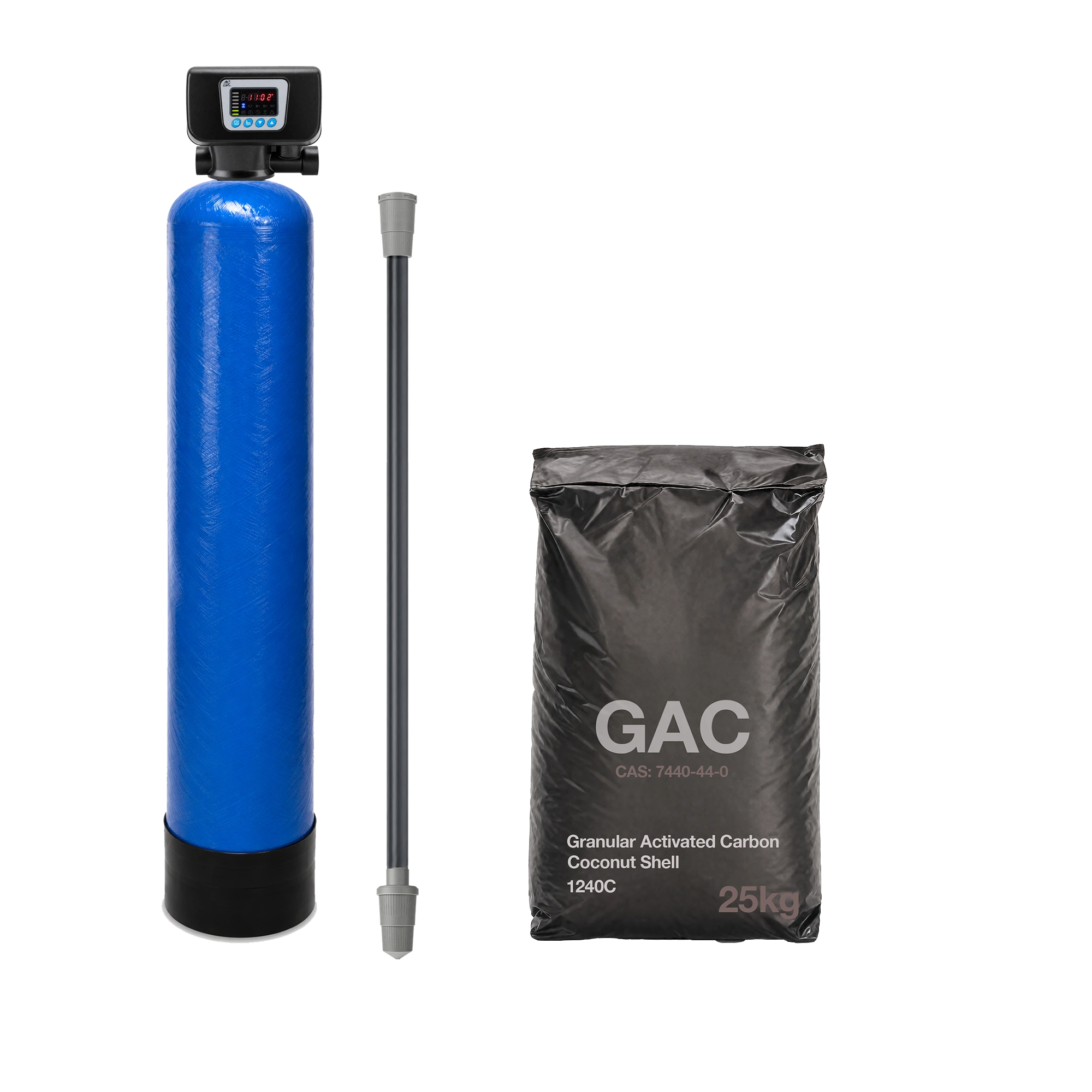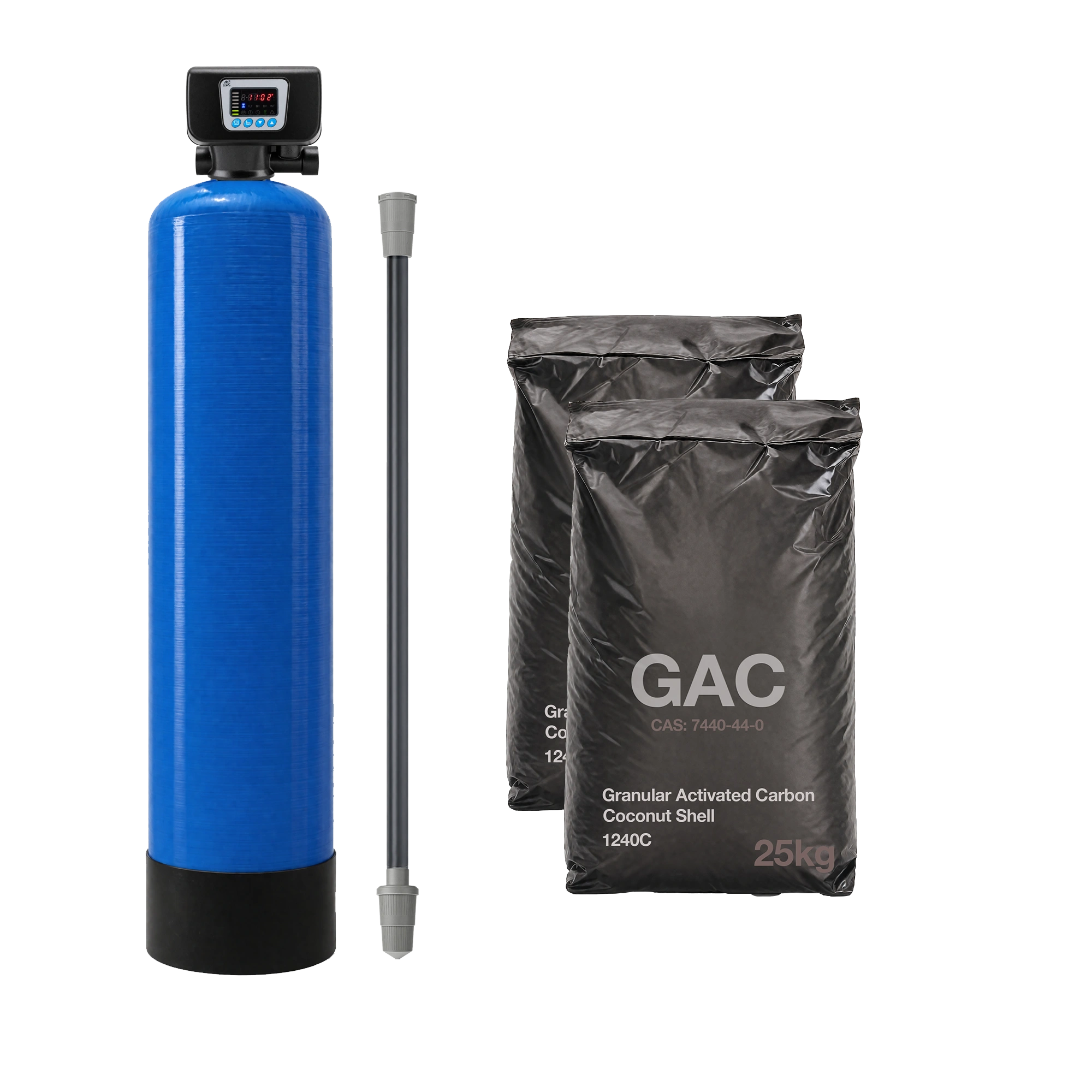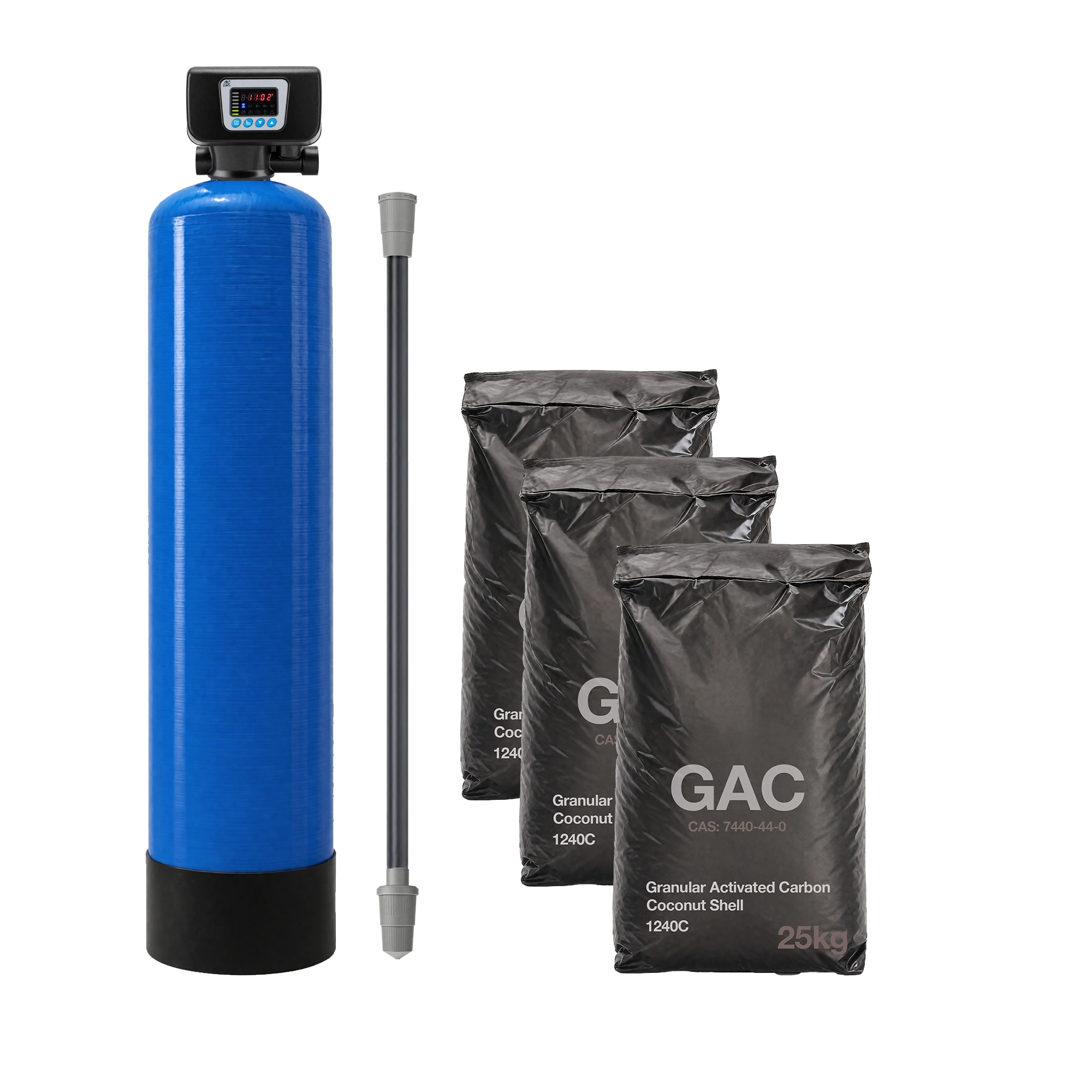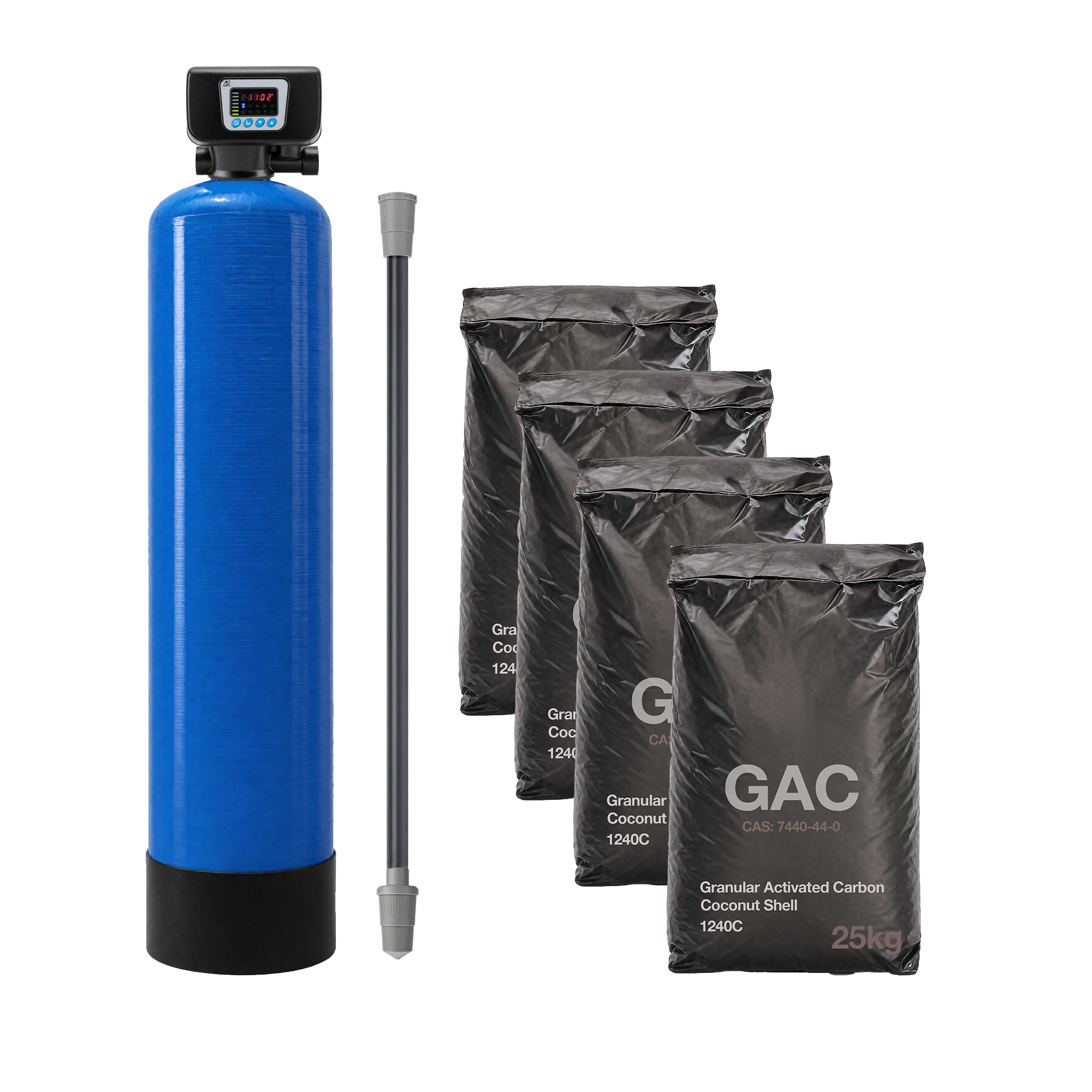
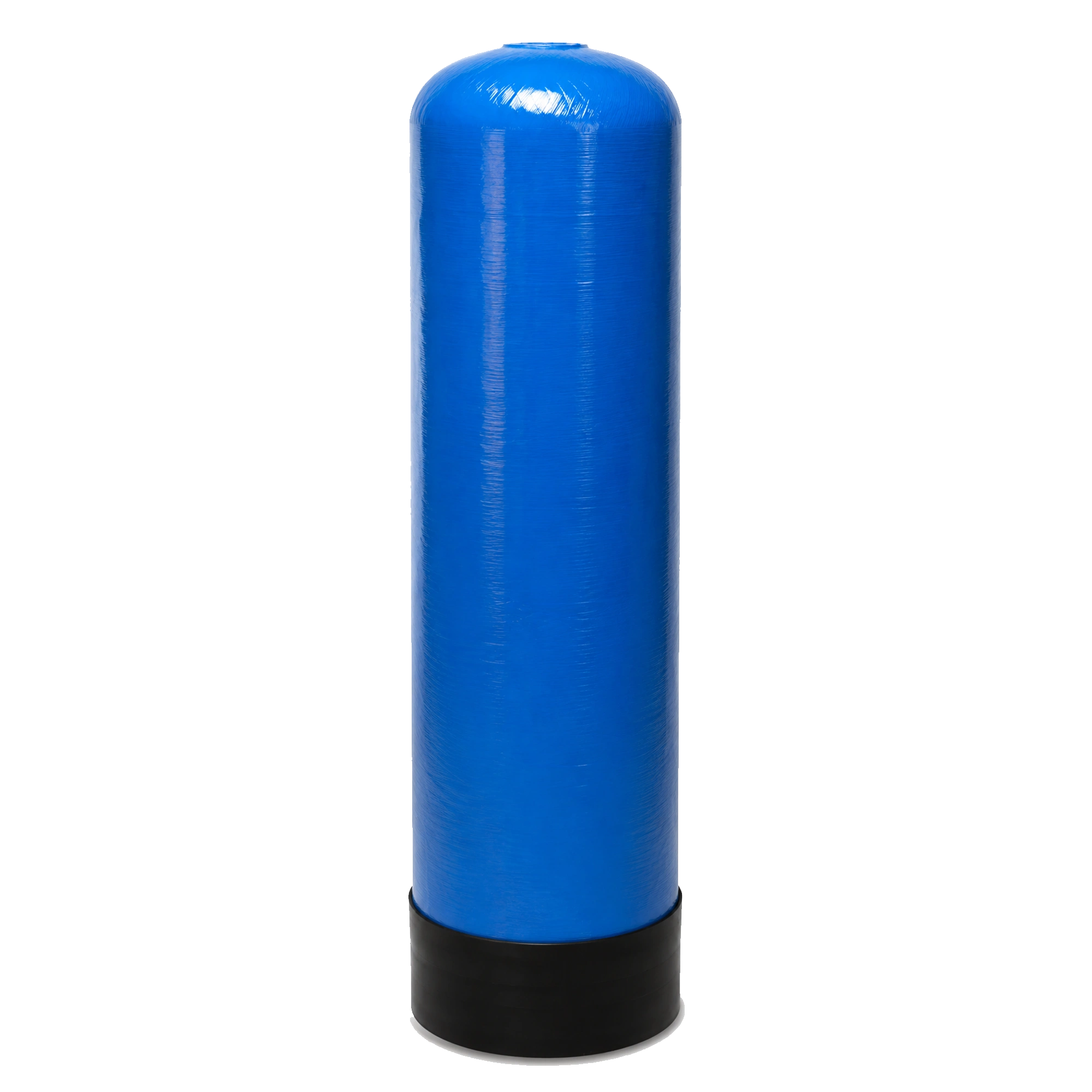
GAC 14X65 Activated Carbon Block 120 Litre FRP with Auto Backwash
This System Includes
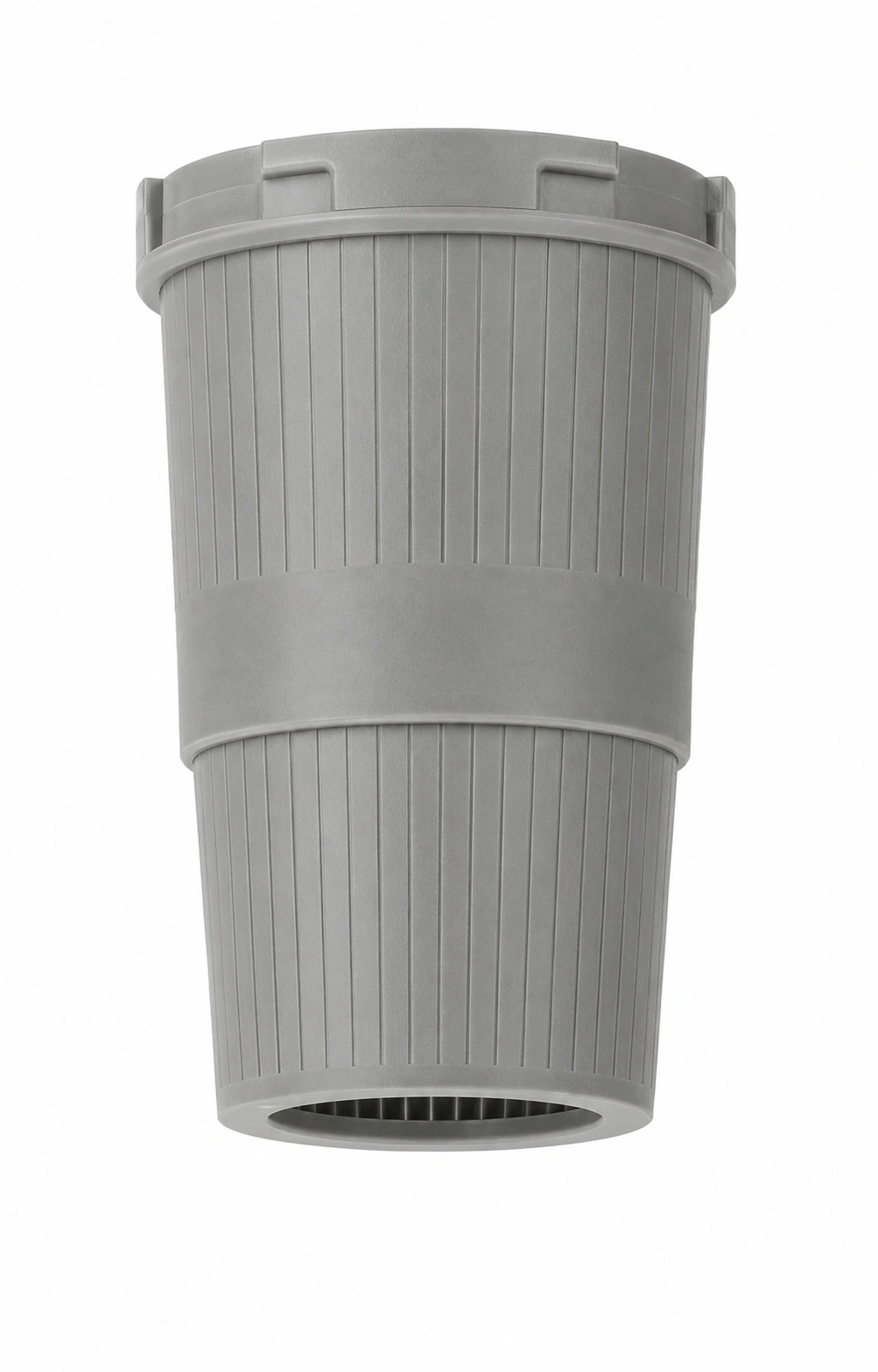
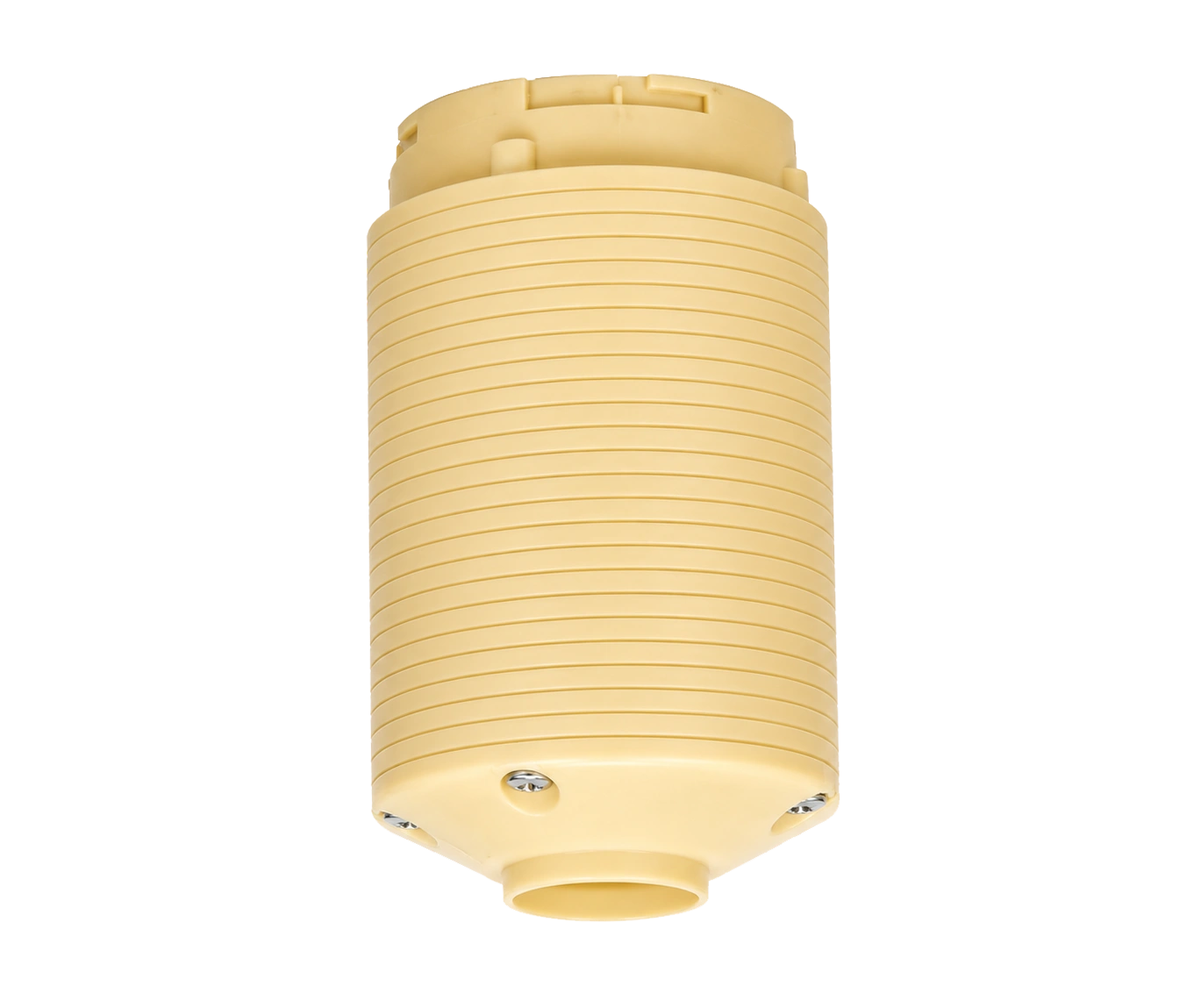
Bottom Distributor Select

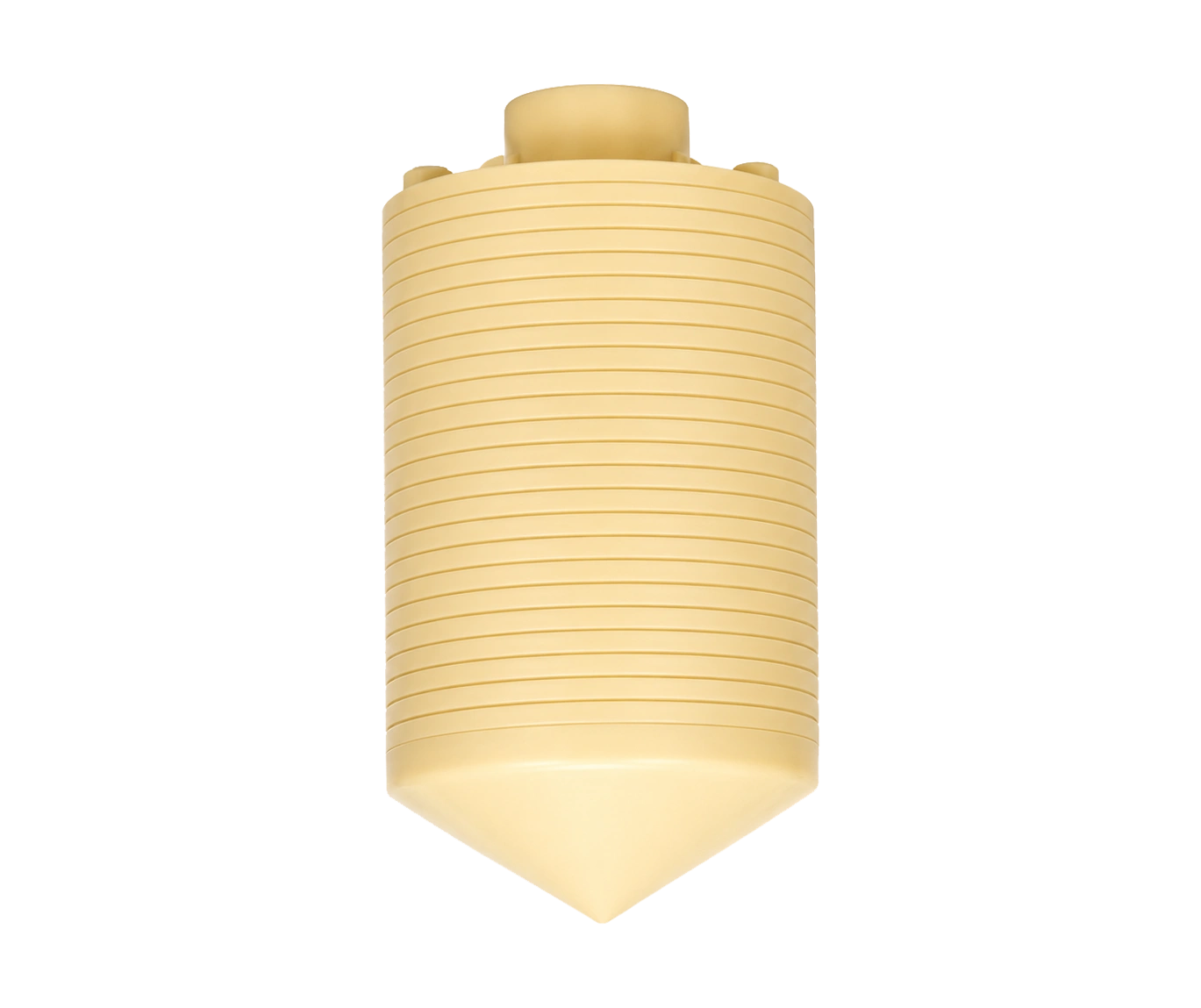
Top Distributor Select
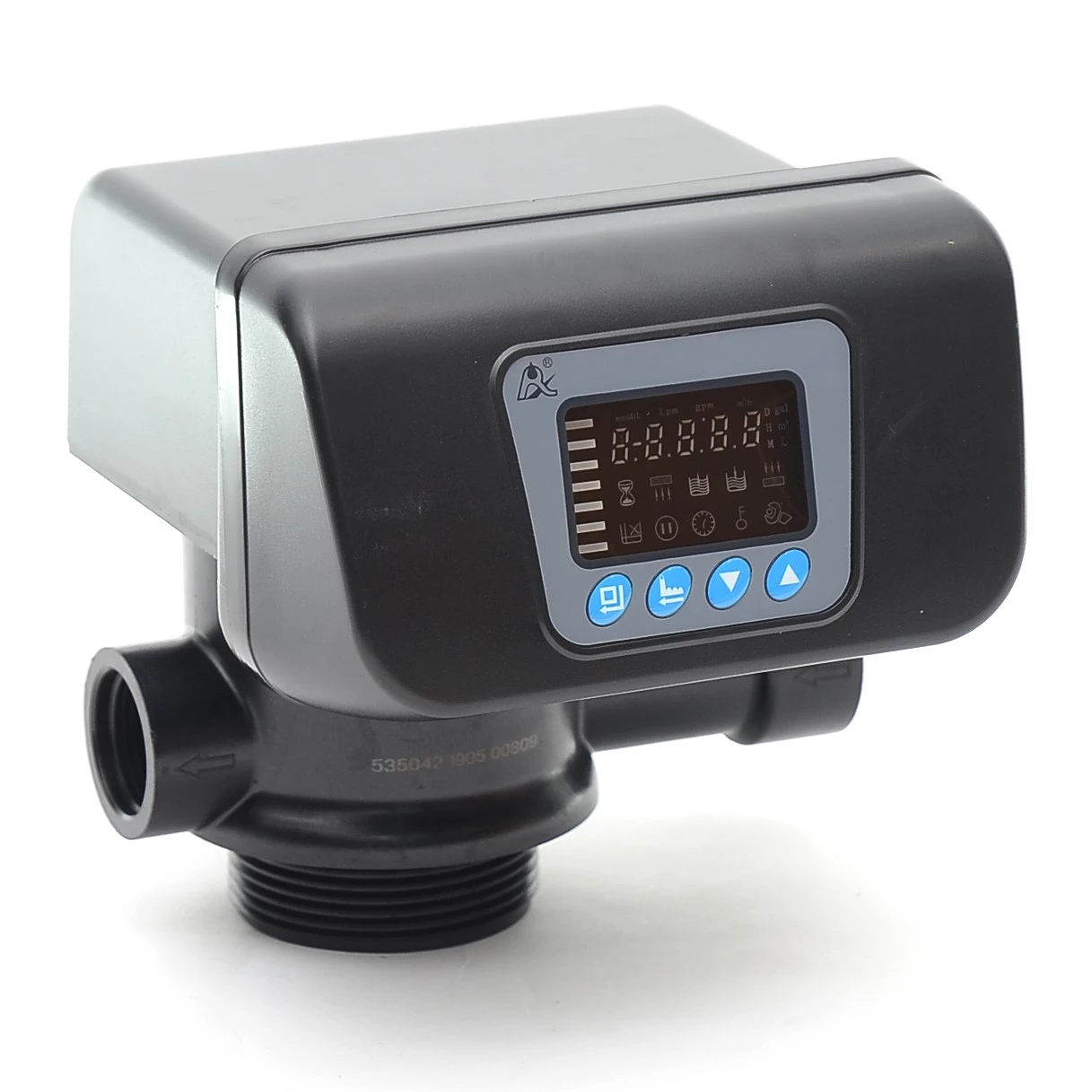
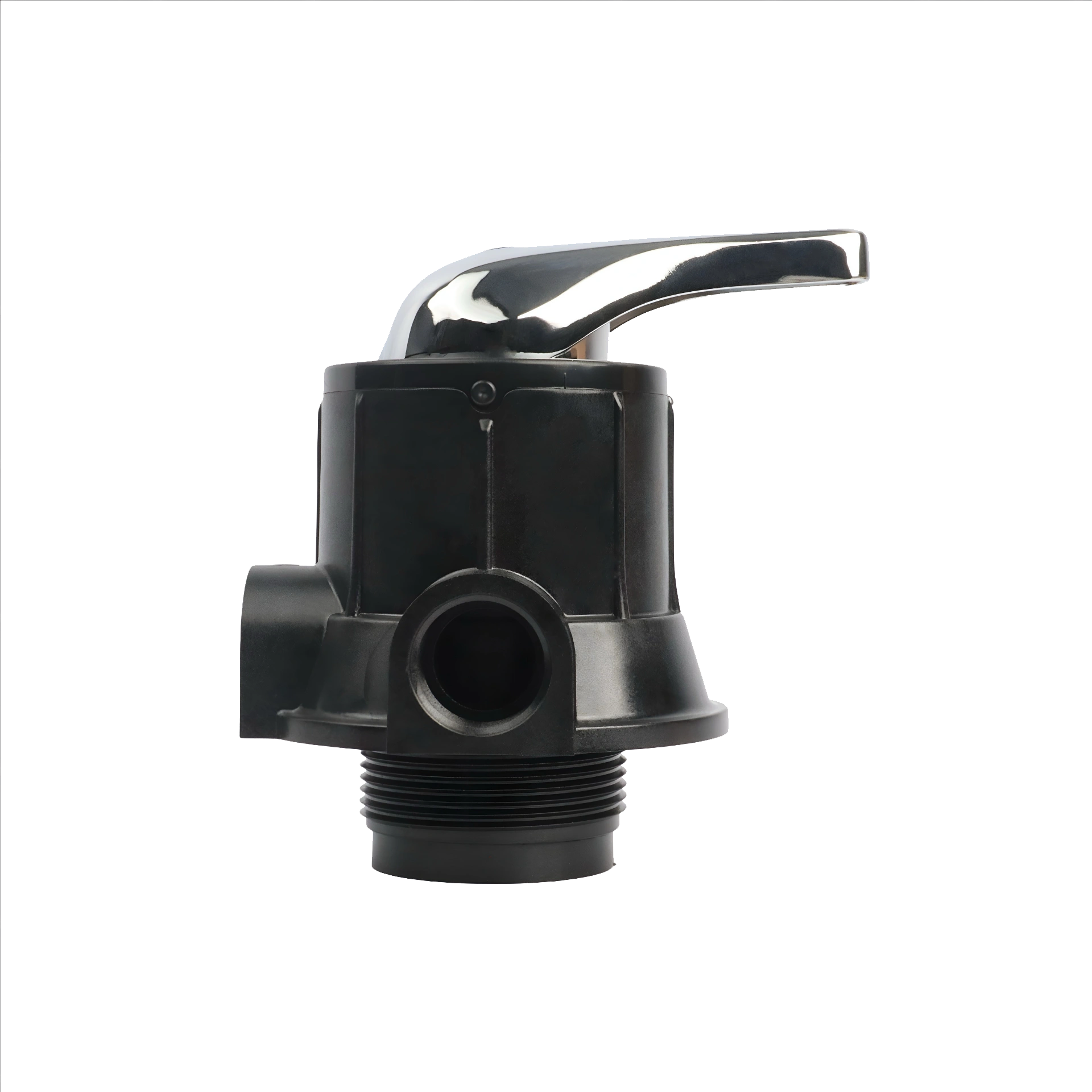
Filter Head Type
What carbon filtration does for your water
Activated carbon works by adsorption: dissolved contaminants stick to the surface of the carbon as water flows through it. Each gram of coconut shell carbon has roughly 1,000–1,200 m² of internal surface – the area of several tennis courts – packed into millions of microscopic pores that trap molecules far too small for any ordinary filter to catch.
- Removes chlorine taste and smell: carbon converts free chlorine to harmless chloride. Essential after chlorine or sodium hypochlorite dosing for drinking water and irrigation, and it protects downstream iron removal media and RO membranes that chlorine would damage.
- Reduces VOCs (volatile organic compounds) – see below.
- Reduces pesticide and herbicide residues that can reach groundwater from farmland, gardens and golf courses.
- Removes hydrogen sulphide: the rotten-egg smell common in borehole water.
- Improves taste and odour: adsorbs the earthy, musty and swampy compounds (such as geosmin and MIB) behind “off” tasting water.
- Reduces colour: removes the tea-coloured tannins and humic substances common in Cape groundwater and wellpoint water.
- Reduces disinfection by-products: such as trihalomethanes (THMs), which can form when chlorine reacts with organic matter in the water.
- Protects the rest of your system: by removing chlorine, H2S and organic foulants first, it extends the life of iron removal media, softeners, RO membranes and UV lamps.
VOCs explained
Volatile organic compounds are carbon-based chemicals that evaporate easily. They are usually invisible and often tasteless at the levels found in water, so a lab test is the only way to know they are there. Common examples are:
- Fuel components – benzene, toluene, ethylbenzene and xylene (“BTEX”) from leaking underground fuel tanks, service stations, workshops and spills.
- Industrial solvents and degreasers – such as trichloroethylene (TCE) and tetrachloroethylene (PCE) from dry cleaners, metal works and factories.
- Agricultural chemicals – some fumigants and pesticide ingredients behave as VOCs.
- Disinfection by-products – chloroform and other THMs formed when water is chlorinated.
Groundwater moves slowly and is not exposed to air, so once VOCs reach an aquifer they can stay there for years and travel well beyond the original spill. Long-term exposure to some VOCs is linked to health risks, and because they evaporate they can also be breathed in from shower steam – not only swallowed. Activated carbon is one of the most widely used and effective treatments for reducing VOCs in drinking water.
What carbon does NOT remove
- Bacteria and viruses: carbon does not disinfect – and bacteria can grow on the carbon itself. Where water is used for drinking, follow it with UV disinfection.
- Dissolved salts and minerals: hardness, TDS, chloride, sulphate, nitrate and fluoride pass through. These need softening, ion exchange or reverse osmosis.
- Dissolved iron and manganese: these need an oxidation stage (chemical dosing or ozone) and a filter such as the NanoJet™ STANDARD Iron & Sludge Removal Kit first.
- Silt and cloudiness: heavy suspended solids should be filtered out beforehand so they don’t clog the carbon.
Getting the most from your carbon filter
- Contact time matters: the longer the water spends in the carbon bed, the more it removes. We size the vessel to your flow rate so the water passes slowly enough.
- Backwashing keeps the bed loose and clear of trapped particles, but it does not restore the carbon’s adsorption capacity.
- Replace the carbon when its pores are full – typically when chlorine taste or odour starts coming back. How long that takes depends on your water; your lab results tell us what to expect.
- Where it goes in the system: after iron and manganese removal and any chlorine dosing, and before RO or UV.
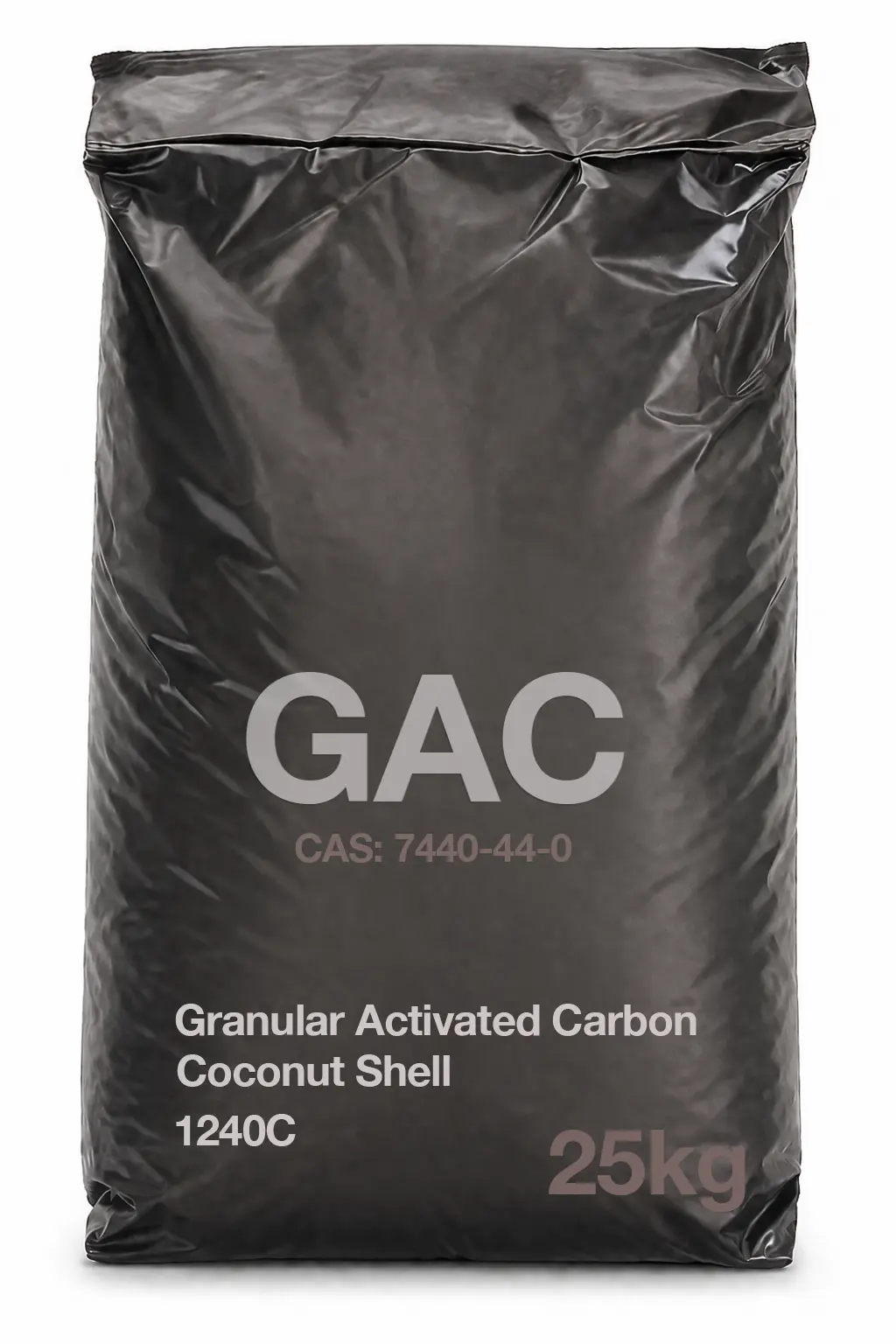
Coconut Shell Granular Activated Carbon (GAC) for Borehole, Groundwater, Municipal & Wastewater Treatment
Critical Setup Guidelines
- Gravel Support Bed: Always place a base layer of supporting gravel at the bottom of the tank to cover the lower distributor basket before adding the GAC.
- Pre-Soaking: Dry GAC should ideally be soaked in water for 12 to 24 hours inside the vessel before initiating the first high-rate backwash to expel trapped air and allow the carbon granules to fully wet.
Product Overview
Coconut Shell Granular Activated Carbon (GAC) is a high-performance adsorption media manufactured by controlled steam activation of coconut shell char. Compared with coal- or wood-based carbons, coconut shell GAC offers a naturally microporous structure, higher hardness, lower ash content, and a greater density of adsorption sites per gram — making it the preferred carbon type for potable water, borehole/groundwater, municipal, and wastewater treatment applications where both contaminant removal efficiency and media longevity matter.
Typical Specifications
- Parameter Typical Value
- Raw material 100% coconut shell
- Mesh size 8×30, 12×40, 20×50 (application dependent)
- Iodine number 900–1100 mg/g
- Ash content < 3% (vs. 6–15% for coal-based carbon)
- Hardness number ≥ 98%
- Moisture content < 5% (as packed)
- Bulk density 0.45–0.55 g/mL
- pH (aqueous extract) 7–9
- Surface area (BET) 1000–1200 m²/g
Core Applications
1. Borehole & Groundwater Treatment Groundwater frequently carries dissolved gases, natural organics, and geology-derived contaminants (H₂S, tannins, agricultural VOCs/pesticide residues, and taste/odour compounds) that are not effectively removed by simple filtration alone. GAC provides a robust polishing stage that adsorbs these dissolved organics and gases before water is used for domestic, agricultural, or process purposes.
2. Municipal Drinking Water Treatment GAC is widely used as a finishing/polishing stage after coagulation, flocculation, and disinfection to remove disinfection by-products (THMs, HAAs), residual taste and odour compounds (geosmin, MIB), and trace organic contaminants, while also reducing chlorine taste ahead of distribution or point-of-use supply.
3. Wastewater & Effluent Treatment In tertiary treatment, GAC removes residual dissolved organics, colour bodies, surfactants, and trace industrial contaminants that survive biological treatment, helping effluent meet discharge or reuse standards, and is also used in odour-control (H₂S scrubbing) duties on wastewater collection and treatment infrastructure.
Why VOCs, Hydrogen Sulfide, and Chlorine Must Be Removed Before BIRM®, Katalox Light® and other Iron Removal Filters (Including RO)
Iron removal media such as BIRM® and Katalox Light® (and similar manganese-dioxide-catalysed filtration media), as well as Reverse Osmosis (RO) membranes, are chemically and mechanically sensitive systems. Pre-treatment with GAC is important for the following reasons:
- Hydrogen Sulfide (H₂S): BIRM and Katalox Light relies on an active manganese dioxide coating to catalyse the oxidation of dissolved iron and manganese. H₂S competes for oxidation capacity, coats and fouls the catalytic media surface, and depletes its effectiveness rapidly — leading to iron/manganese breakthrough and persistent "rotten egg" odour in the treated water. RO membranes are similarly attacked: H₂S is corrosive to membrane elements and downstream metal fittings, and can support sulfur-reducing bacterial growth that fouls the membrane surface.
- Chlorine (Residual Disinfectant): BIRM and Katalox Light's catalytic manganese dioxide coating is oxidised and destroyed by free chlorine, permanently deactivating the media over time. Thin-film composite RO membranes are even more chlorine-sensitive — continuous exposure oxidises the polyamide membrane layer, causing irreversible loss of rejection performance and premature membrane failure. GAC catalytically reduces free chlorine to chloride via a surface reaction, protecting both media types. (Note: chlorine, the reactive disinfectant, is what GAC removes and what damages BIRM/RO membranes — this is distinct from chloride, the dissolved salt ion, which passes through GAC largely unaffected and is instead reduced by RO or ion exchange.)
- Volatile Organic Compounds (VOCs): VOCs and other dissolved organics can foul RO membrane surfaces, promote biofilm formation, and in some cases chemically attack membrane polymers, reducing flux and rejection rates over the system's service life. Removing VOCs upstream extends membrane life and maintains consistent permeate quality.
- Overall system protection: By stripping oxidants, corrosive gases, and organic foulants upstream, GAC pre-treatment reduces fouling frequency, extends the working life of iron removal media and RO membranes, lowers cleaning/replacement costs, and maintains consistent downstream water quality and system output.
Effect of GAC Filtration on Raw Water Quality
Passing raw water through a properly sized and maintained GAC media filter typically produces the following changes:
- Removal/reduction of dissolved organics — natural organic matter, tannins, humic/fulvic acids, pesticide and herbicide residues, and industrial trace organics are adsorbed onto the carbon's internal pore structure.
- De-chlorination — free and combined chlorine residuals are catalytically reduced, eliminating chlorine taste and odour and protecting downstream media/membranes.
- Odour and taste correction — H₂S ("rotten egg" odour), geosmin, MIB, and other taste/odour-causing compounds are adsorbed, producing clearer-tasting, odour-free water.
- Colour reduction — organically bound colour (tannins, humic substances) is reduced, improving water clarity.
- VOC reduction — volatile organic compounds are adsorbed from solution, lowering the organic load carried into downstream processes.
- Improved downstream treatment performance — by removing oxidants, foulants, and competing contaminants, GAC pre-treatment protects and extends the service life of subsequent processes (iron/manganese removal media, softeners, RO membranes, UV disinfection).
- Does not significantly affect hardness, dissolved salts (including chloride, sulfate, nitrate), or turbidity/suspended solids — these require separate treatment steps (softening, RO, ion exchange, or mechanical filtration respectively).
The net result is water that is clearer, odour- and taste-neutral, lower in reactive oxidants and dissolved organics, and better conditioned for effective, long-lasting performance of downstream treatment stages such as BIRM/iron removal filtration and Reverse Osmosis.
| SKU | GAC---0306 |
| Variant SKU | GAC---0306-DEFAULT |
| Brand | CWT |
| Condition | New |
| Stock | In Stock (Unlimited) |
Reviews coming soon.