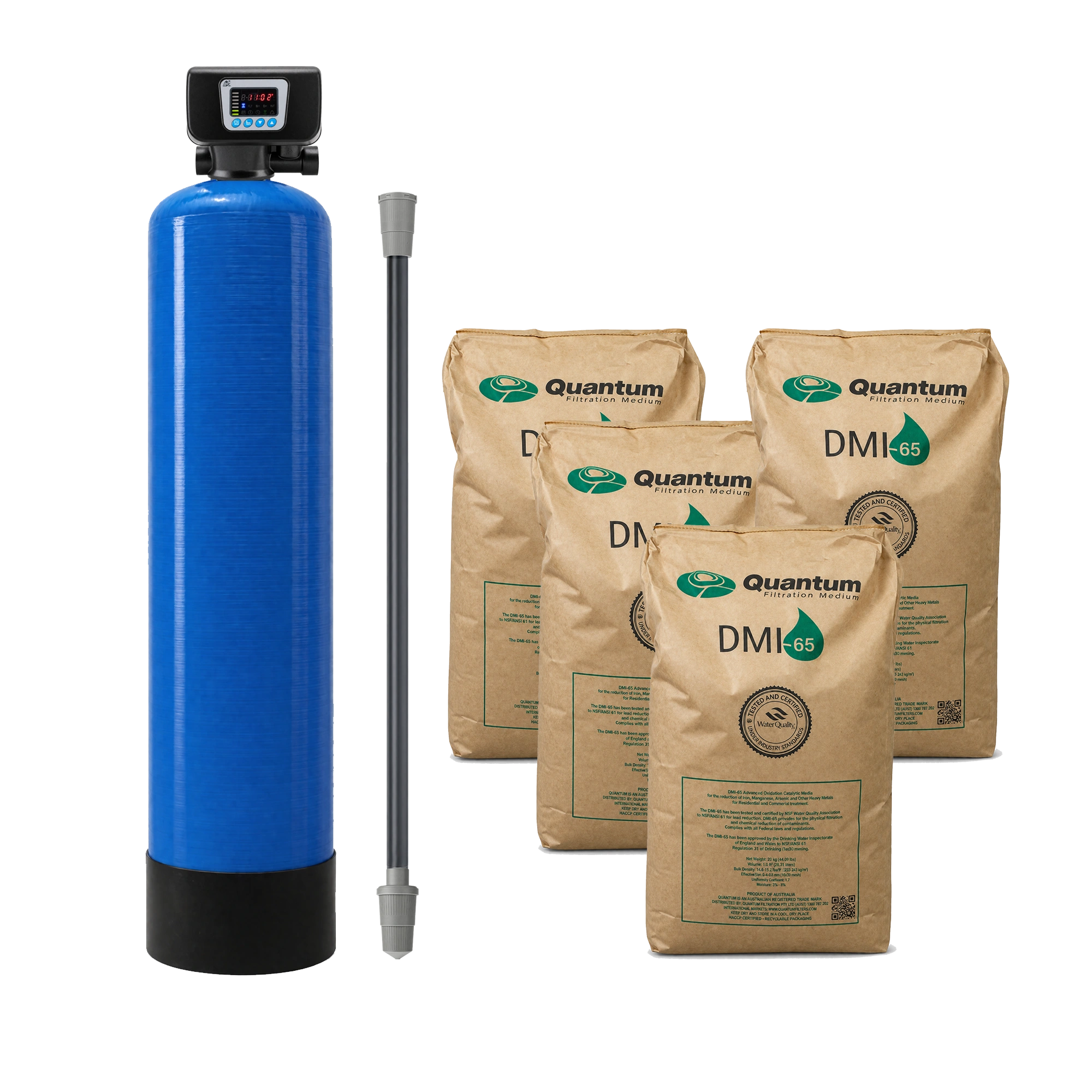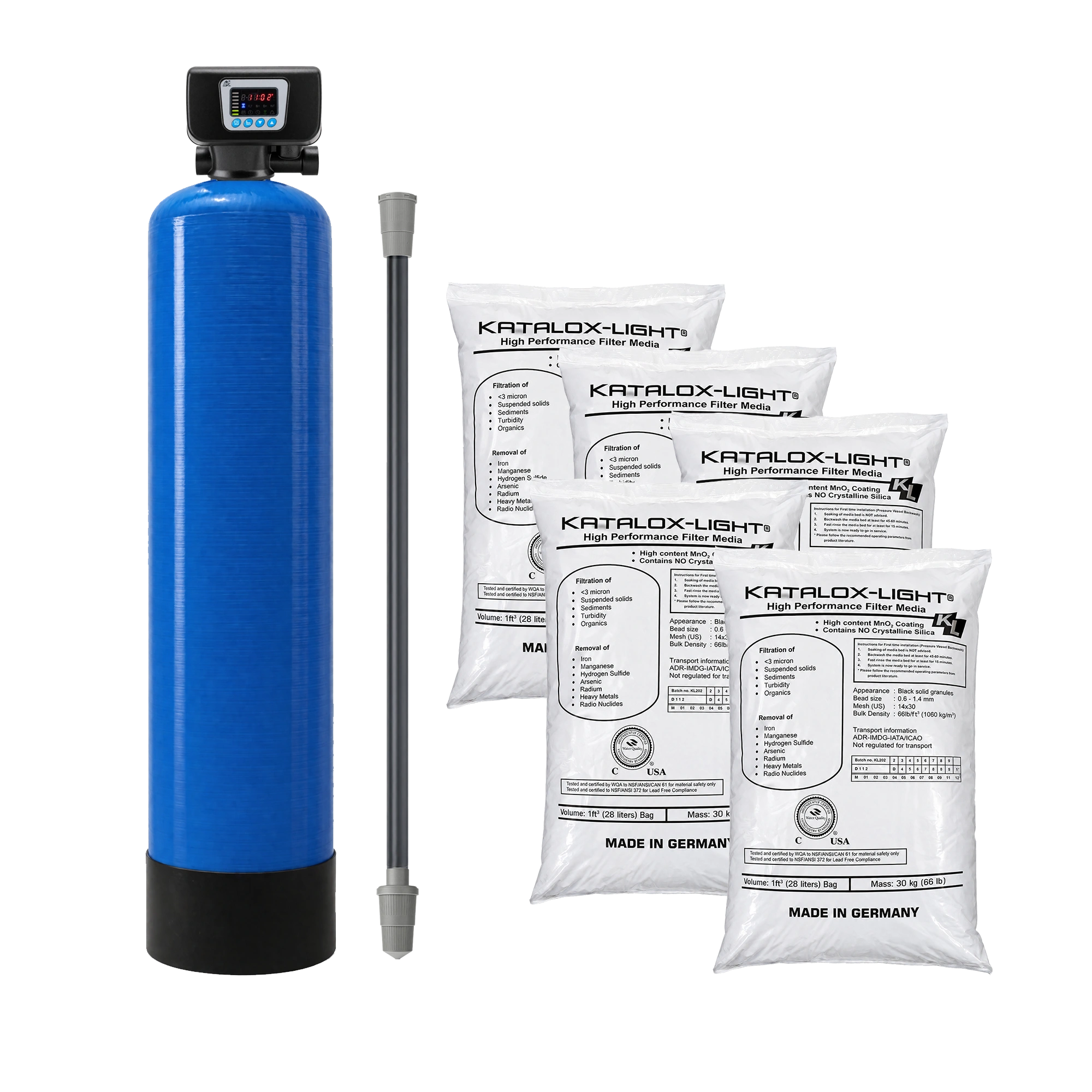
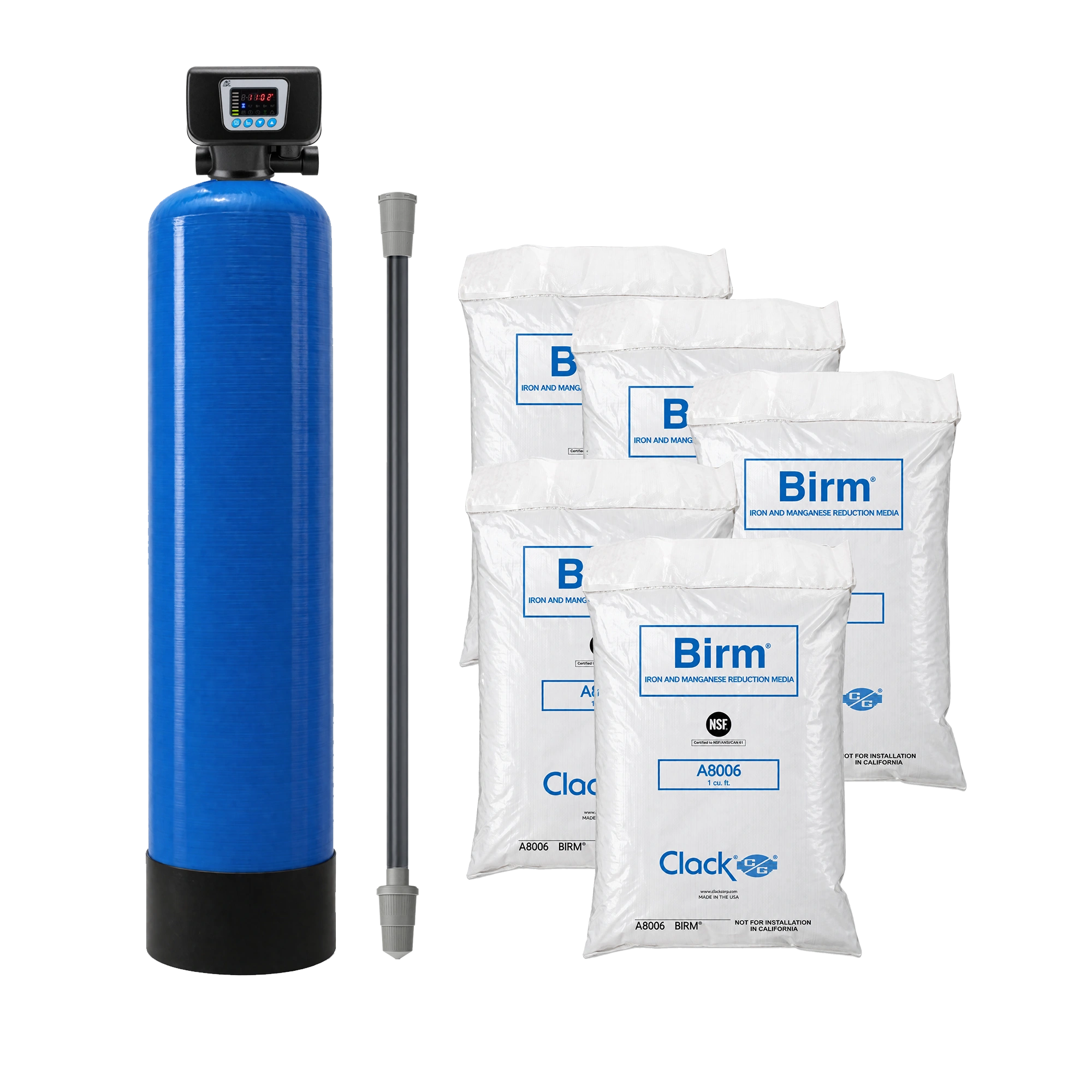
BIRM® Catalytic Iron Removal Filter(Sized Unit)
FRP fittings to match your vessel size
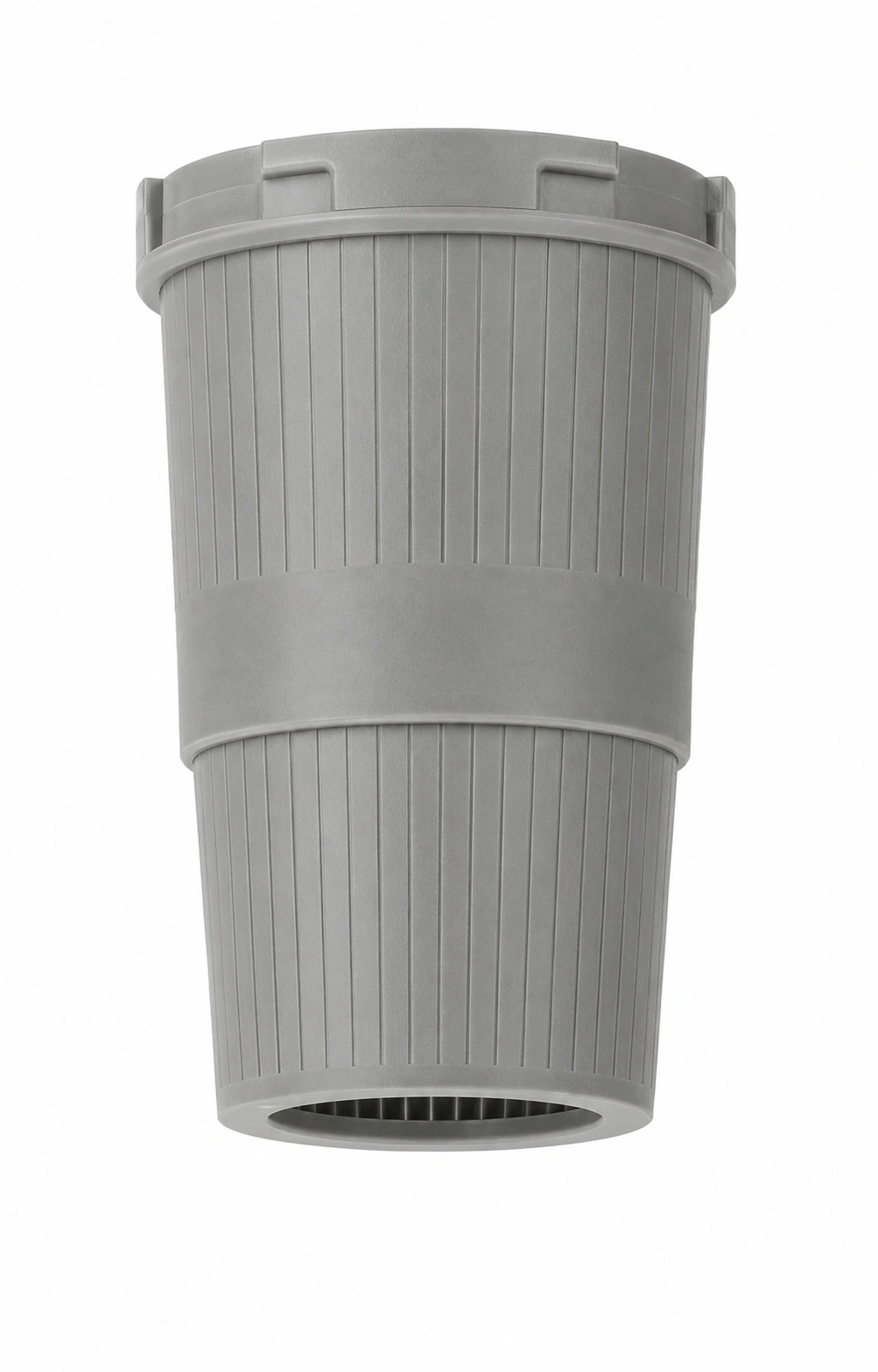

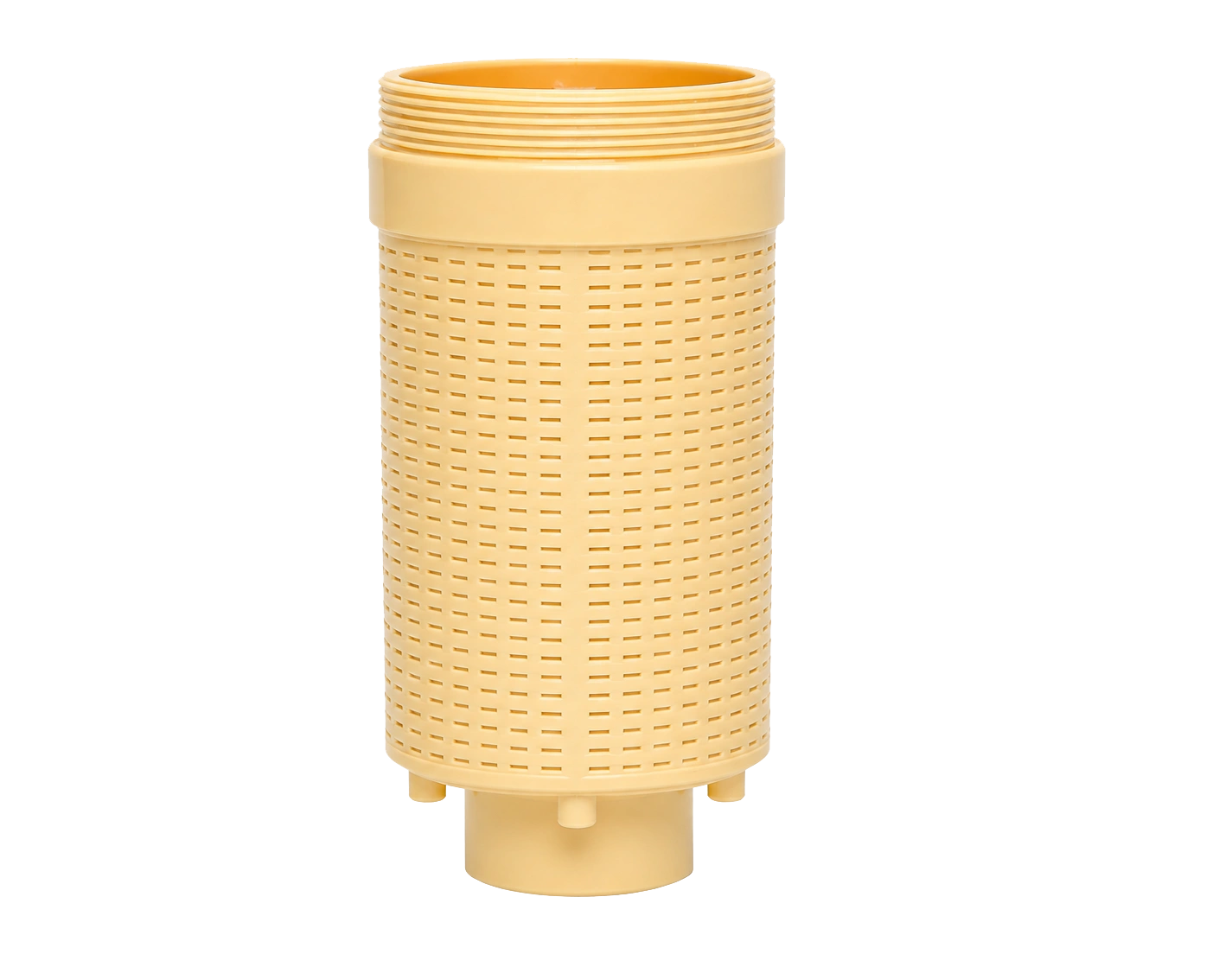
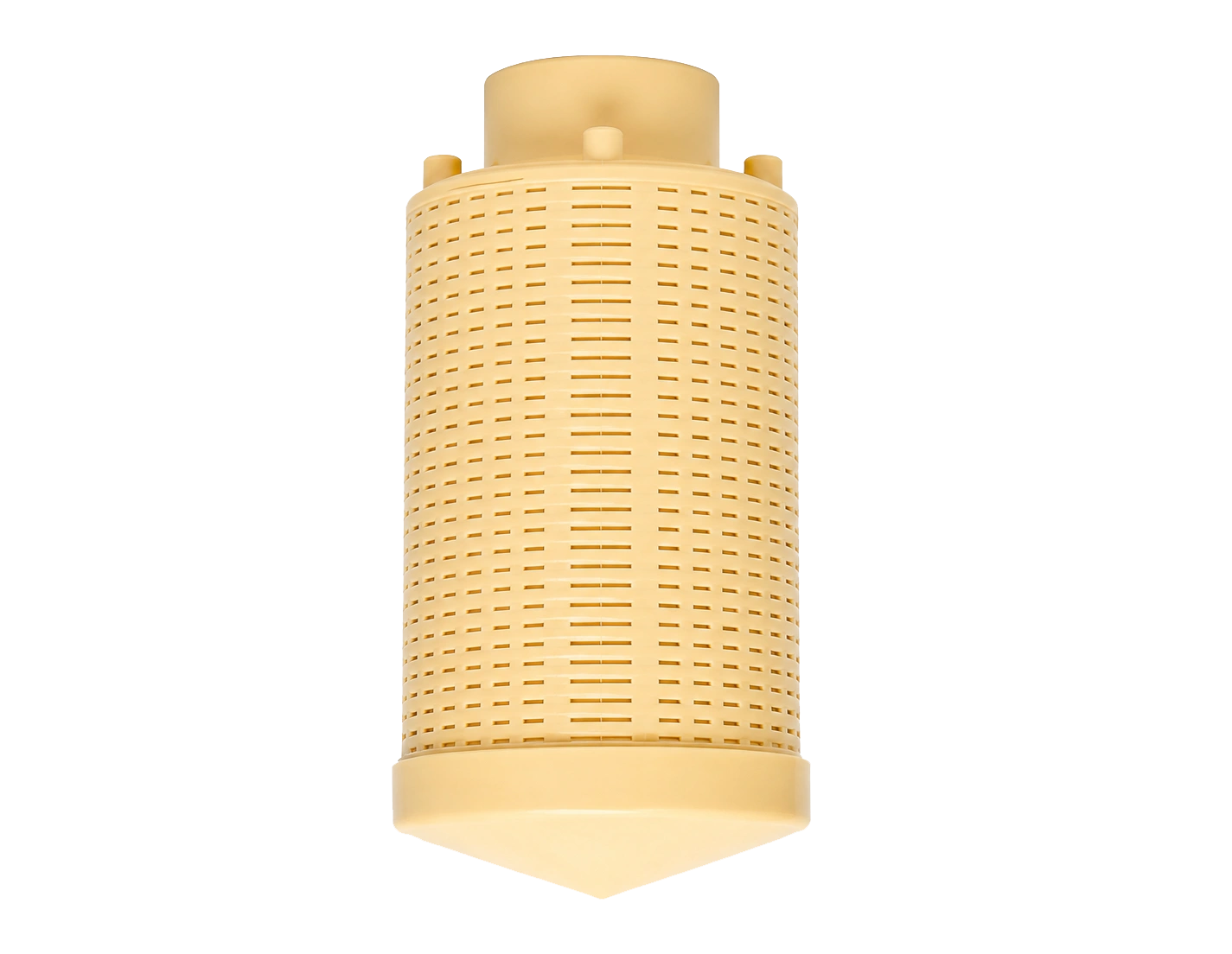

This System Includes
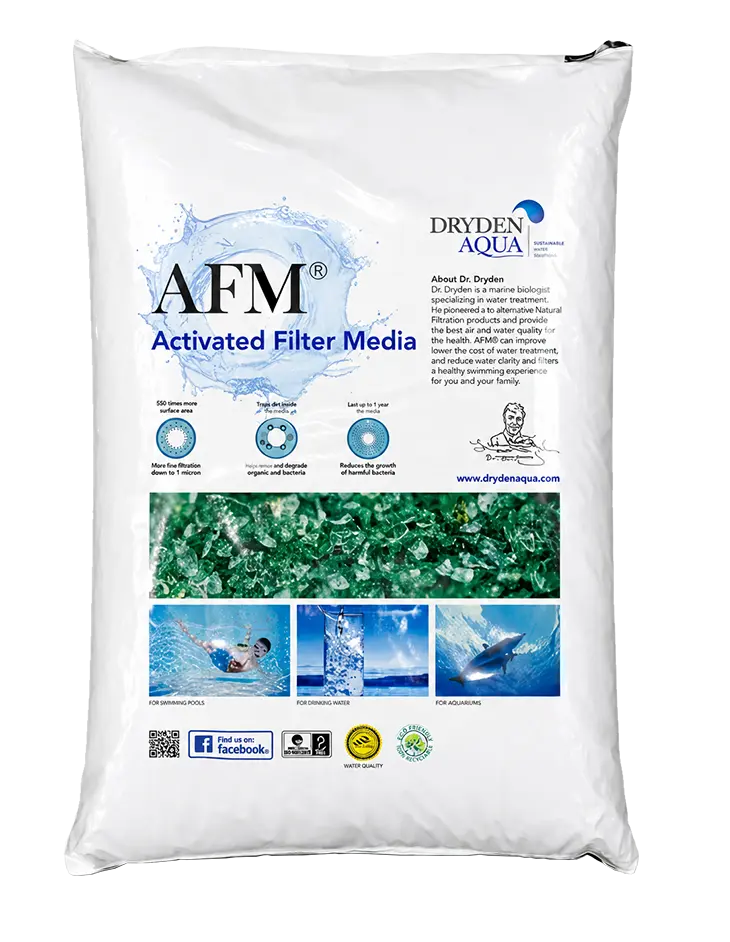
Check "Activated Filter Media AFM® Grade 3 (25Kg) if you intend using to this to protect the laterals and prevent "mud-balling" and "wormhole channeling" at the bottom of the filtration vessel.
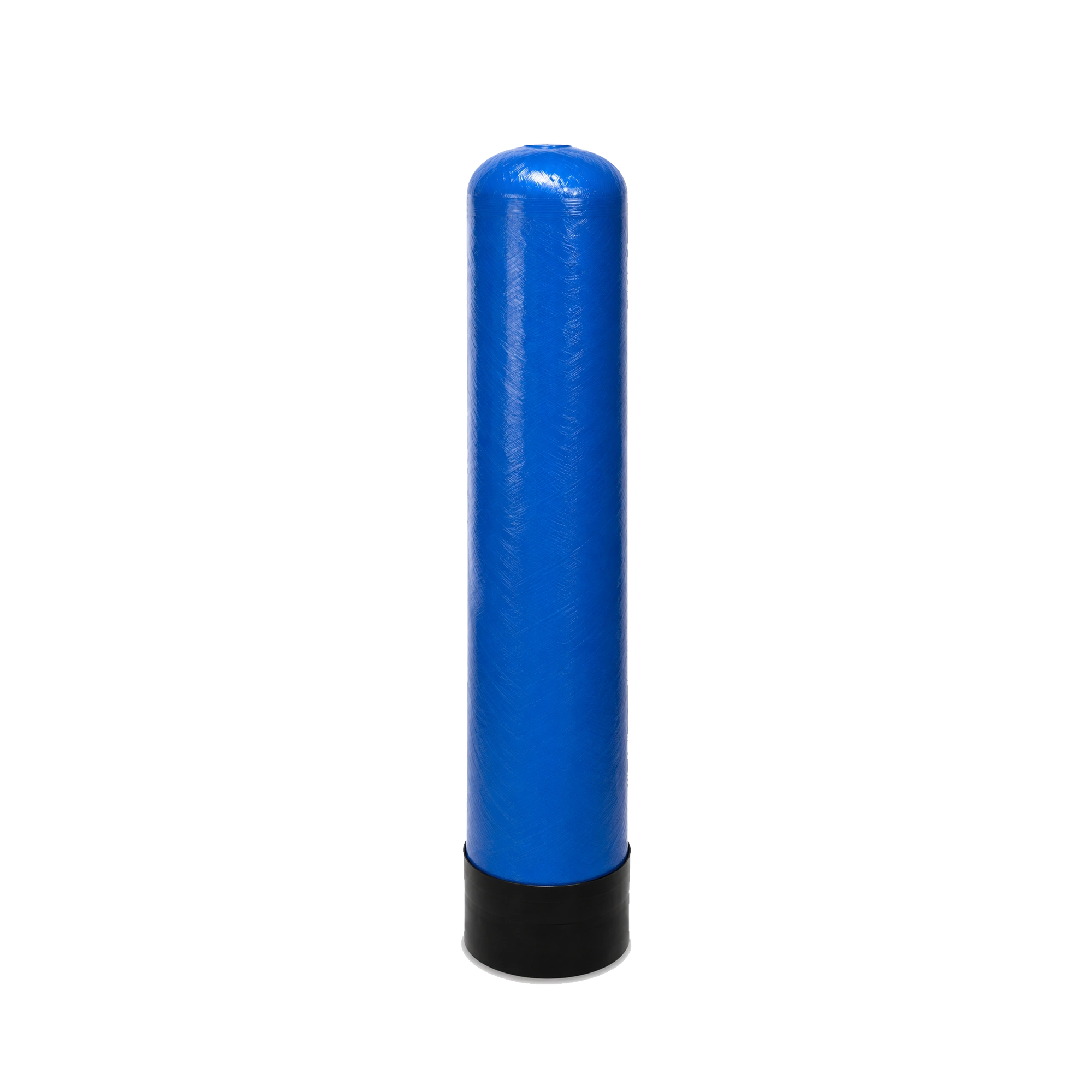
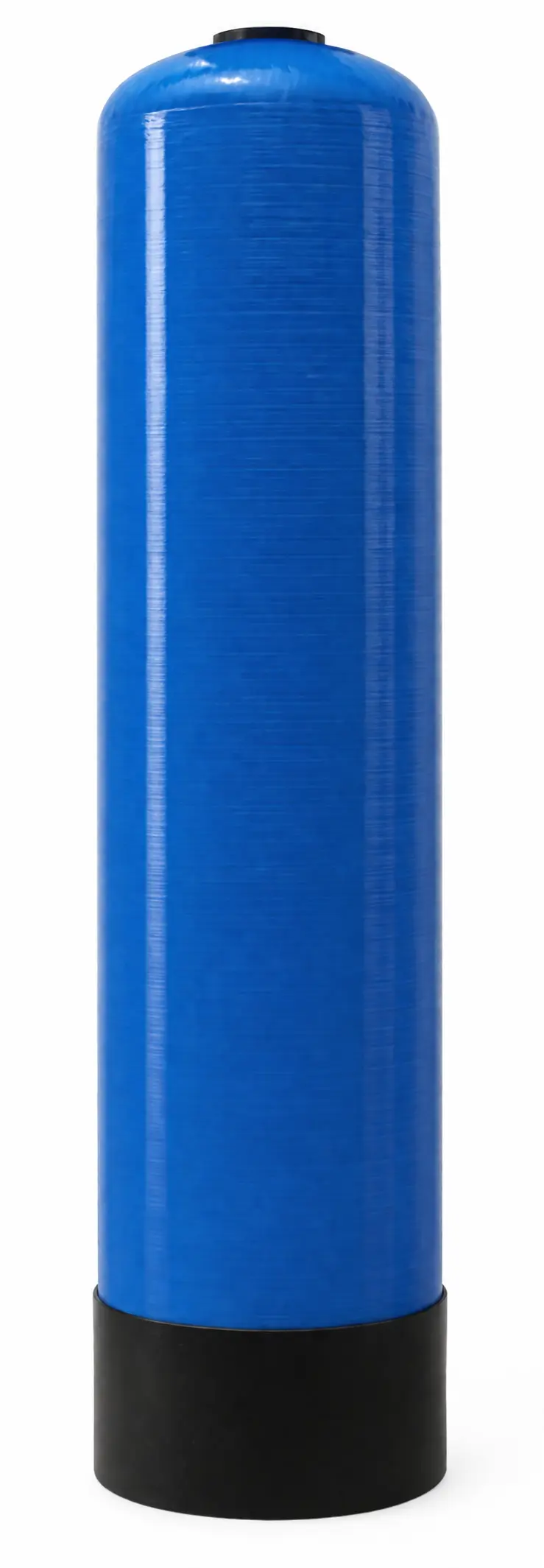
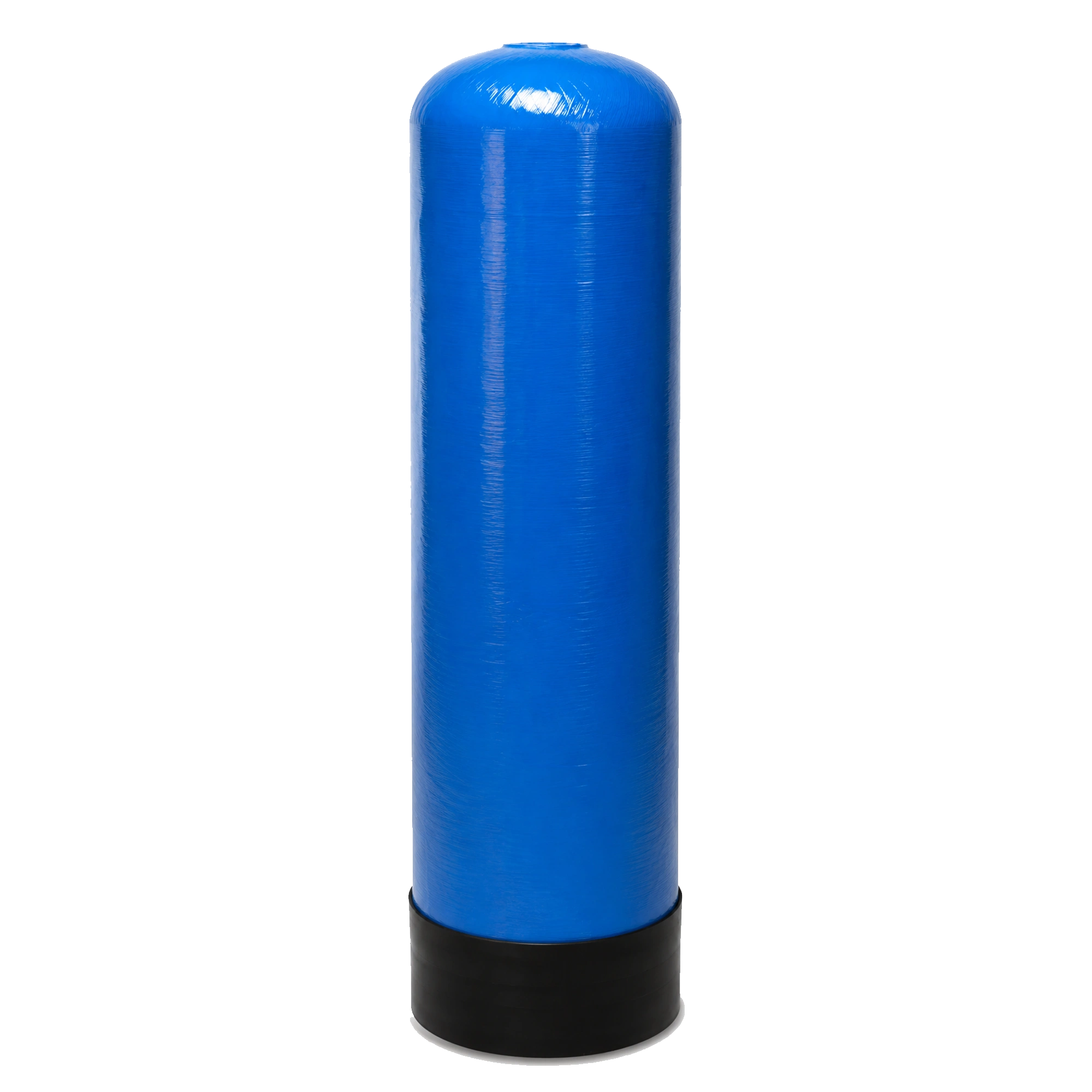
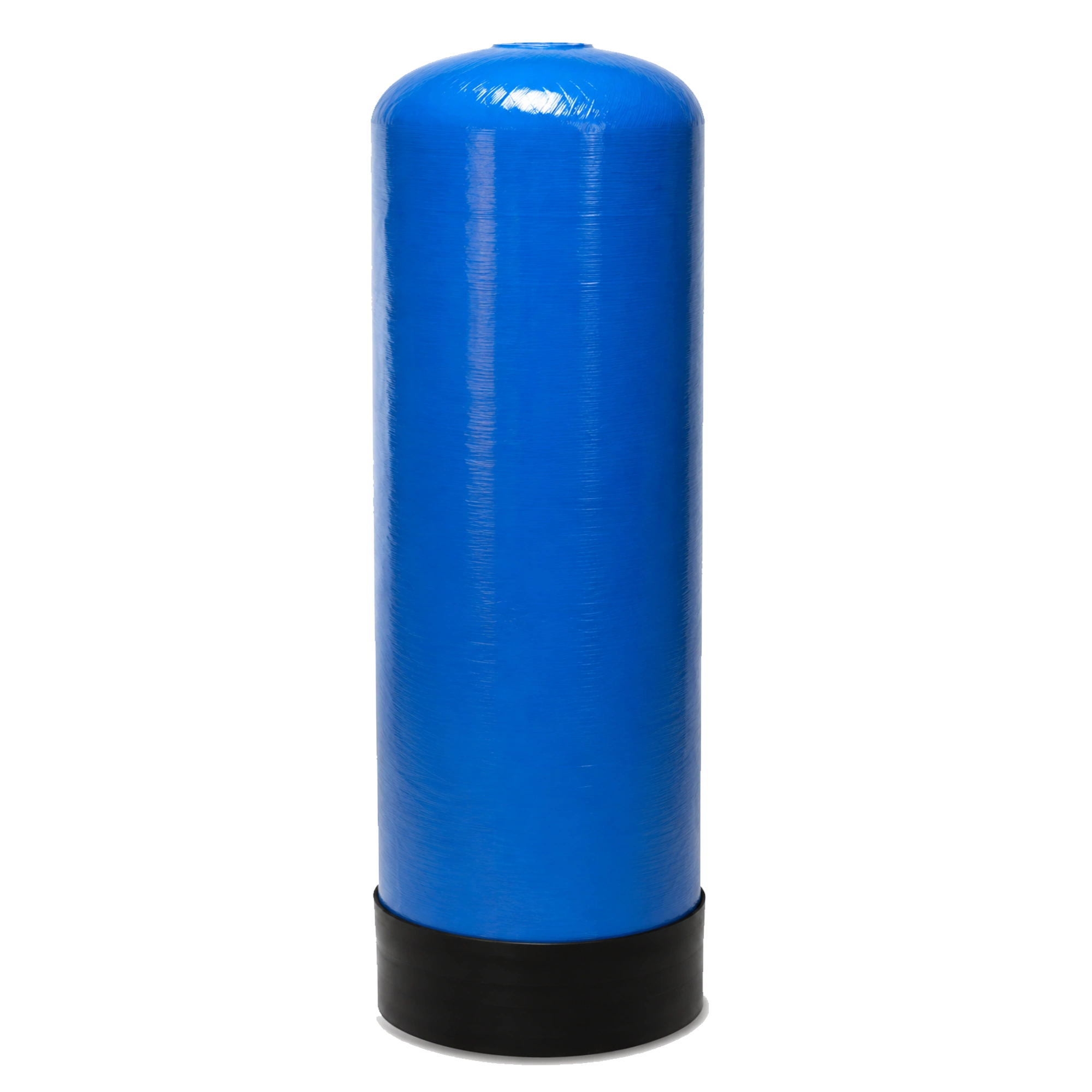
FRP Size
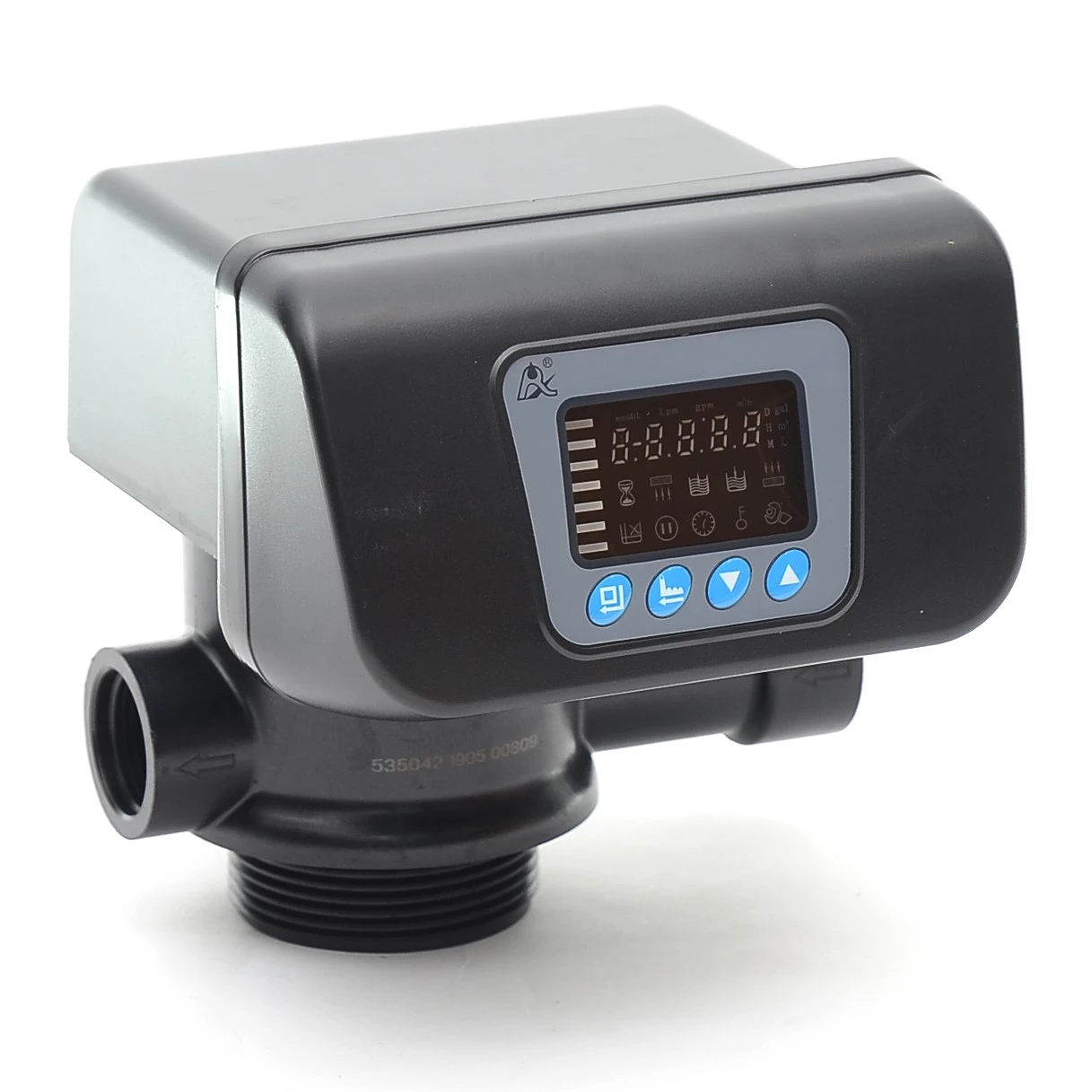
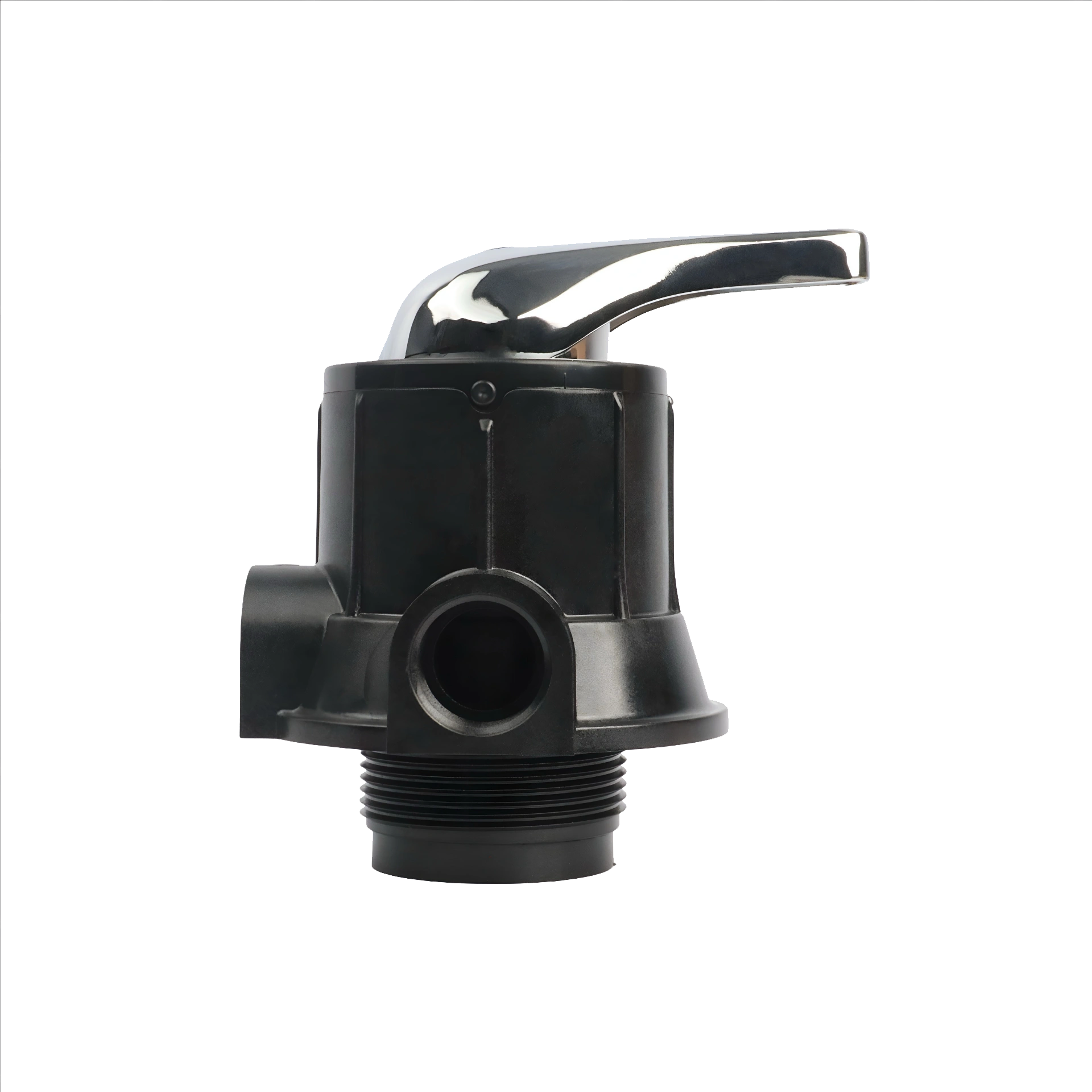
Filter Head
Vessel Size
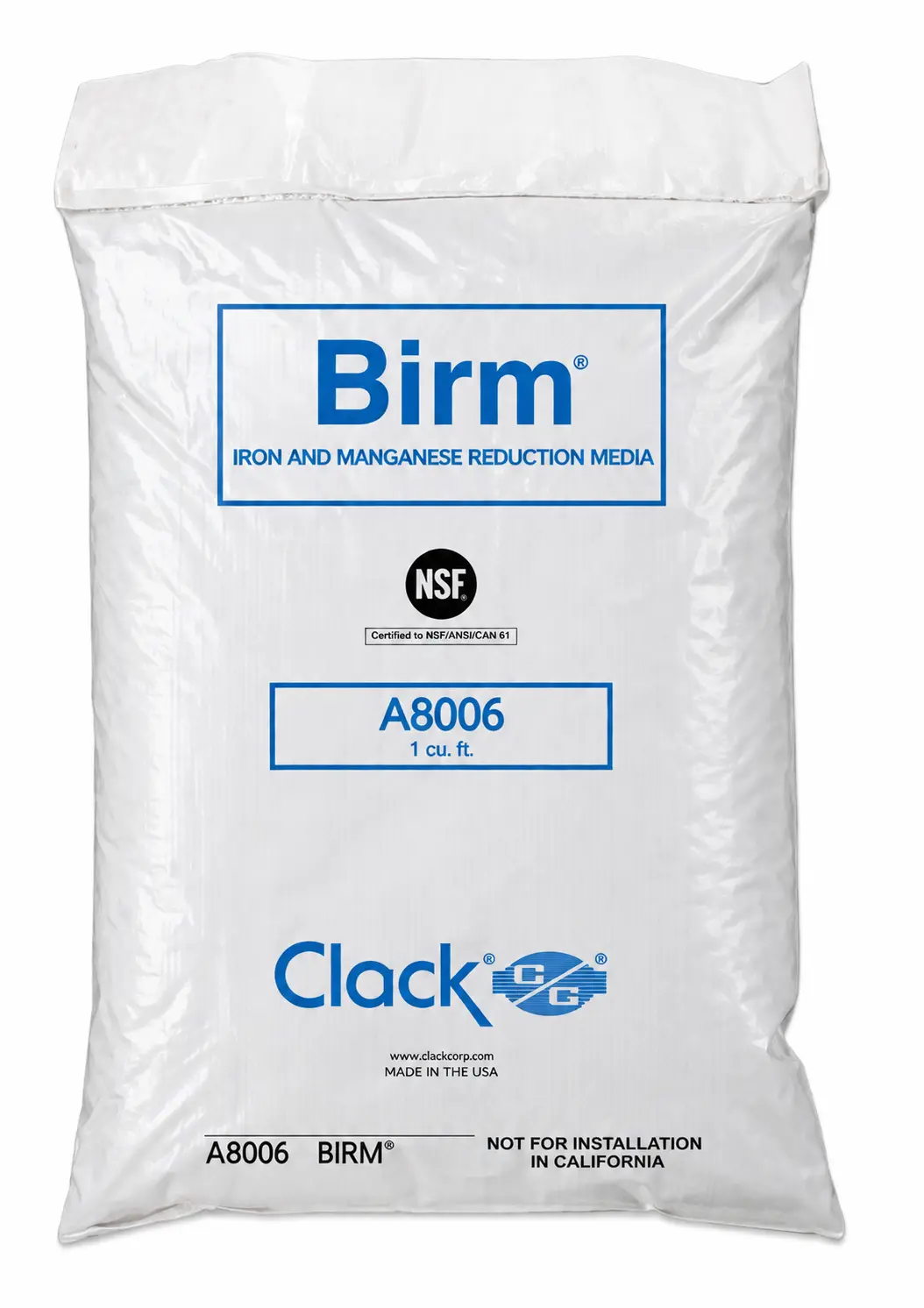
Clack BIRM® Catalytic Iron Removal Media
BIRM® (Black Iron Removal Media) operates as a catalytic filter to precipitate dissolved iron and manganese. It requires a water pH of 6.8–9.0, dissolved oxygen (DO) of at least 15% of the iron content (29% for manganese), maximum temperature of 38°C (100°F), and no oil, hydrogen sulfide, or polyphosphates.
Key Operating Conditions
- Water Quality: Requires a pH of 6.8–9.0, alkalinity exceeding twice the sum of sulfates and chlorides, and oxygen levels \(\ge \)15% of iron (29% of manganese). Iron and manganese levels should not exceed 5 ppm for optimal operation. [1, 2]
- Contaminant Limits: Free from oil, polyphosphates, and hydrogen sulfide. Organic matter (TOC) should be \(<5\) ppm. [1]
- System Setup: Requires a 30–36 inch bed depth with a 50% minimum freeboard. [1]
- Flow Rates: Service rates of 3.5–5 gpm/sq. ft. are recommended, with backwash rates of 10–12 gpm/sq. ft. to ensure proper 20–40% bed expansion. [1, 2]
- Physical Properties: The media is matte black with a bulk density of 40–45 lbs/cu. ft..
How Dissolved Oxygen Powers Birm
- Catalytic Activation: Birm’s manganese dioxide coating uses the electrical and chemical properties of available oxygen to speed up oxidation.
- Precipitation: Sufficient DO ensures that dissolved iron turns into filterable solid particles instead of slipping through the media.
- Sustained Capacity: Because Birm is a catalyst rather than a consumable reactant, an ongoing supply of DO keeps the media active without needing chemical regeneration.
Requirements for Maximum Efficiency
- DO Threshold: The water must contain a dissolved oxygen level equal to at least 15% of the total iron and manganese content.
- Low Oxygen Fixes: If raw water lacks adequate oxygen (common in deep well or borehole setups), an aeration or air-injection system must be added upstream.
- pH Balance: The water pH must remain at 6.8 or higher for the oxygen-driven catalytic reaction to proceed efficiently.
NOTE
Dissolved Oxygen (DO) acts as the primary oxidizing agent that Birm filter media uses to convert soluble ferrous iron into insoluble ferric hydroxide (rust). Birm functions purely as an insoluble catalyst; it does not get consumed, but instead accelerates the chemical reaction between the DO and the dissolved metals so they can be trapped and backwashed out.
WARNING
BIRM filter media efficacy is reduced or destroyed by hydrogen sulfide, chlorine, polyphosphates, oil, and organic matter. Additionally, water conditions like low pH (under 6.8) or insufficient dissolved oxygen stop the catalytic oxidation process required for contaminant removal.
Contaminants and Chemical Interferences
· Hydrogen sulfide: Destroys the media and smells bad; water must be free of it.
· Chlorine: High levels or shock chlorination strip and deplete the catalytic manganese dioxide coating.
· Polyphosphates: Coat the granules and block the active surface area.
· Oil and organics: Form a sticky layer over the media, stopping filtration.
· High iron levels: Concentrations over 10 mg/L can overload and foul the bed.
Water Parameter Requirements
· Low pH: A pH below 6.8 stops the catalytic reaction.
· Low oxygen: Dissolved oxygen must equal at least 15% of the iron and manganese content.
Standard Operating Parameters
Standard operating parameters for Birm iron and manganese filter media require a service flow rate of 3.5 to 5 gpm/sq. ft. (approx. 8.5 to 12 m/h) and a backwash flow rate of 10 to 12 gpm/sq. ft. (approx. 24 to 29 m/h) to ensure proper bed expansion of 20% to 40%.
Service Flow Parameters
- Rate: 3.5 – 5 gpm per square foot of bed surface area.
- Application: Intermittent peak flows may run higher depending on local water conditions.
- Function: Allows sufficient contact time for the catalytic media to oxidize and trap dissolved iron and manganese.
Backwash Flow Parameters
- Rate: 10 – 12 gpm per square foot of bed surface area.
- Expansion: Expands the media bed by 20% to 40%.
- Requirement: Essential for lifting and cleaning trapped particulates out of the media without washing the lighter Birm granules down the drain.
Critical Operating Limits
- pH Range: 6.8 – 9.0
- Dissolved Oxygen (D.O.): Must equal at least 15% of the total iron and manganese content.
- Freeboard Required: Minimum 50% of the media bed depth.
Flow Rate & Backwash Rate
For a standard BIRM iron-removal filter media, the recommended service flow rate is 8.5 to 12 m/h (3.5 to 5 gpm/sq. ft.), and the required backwash rate is 24 to 29 m/h (10 to 12 gpm/sq. ft.).
Operating Rates
- Service Flow Rate: 8.5 – 12 m/h (higher or intermittent rates are possible depending on local water conditions).
- Backwash Rate: 24 – 29 m/h (set to expand the media bed by 20% to 40%).
- Rinse Rate: Equal to the service flow rate. [1, 2]
| SKU | BIR-B--0319 |
| Variant SKU | BIR-B--0319-DEFAULT |
| Brand | CWT |
| Condition | New |
| Stock | In Stock (Unlimited) |
Reviews coming soon.