NanoDose™ Chlorine Dosing Kit (Excl chemicals)
Use Granular Activated Carbon (GAC) filtration to remove residuals (free chlorine).
Use an AFM® Activated Glass Media filter to strain out the solid iron hydroxides and manganese dioxide particles.
This System Includes
Dosing Tank Colour

NanoDose™ Chlorine Dosing Kit
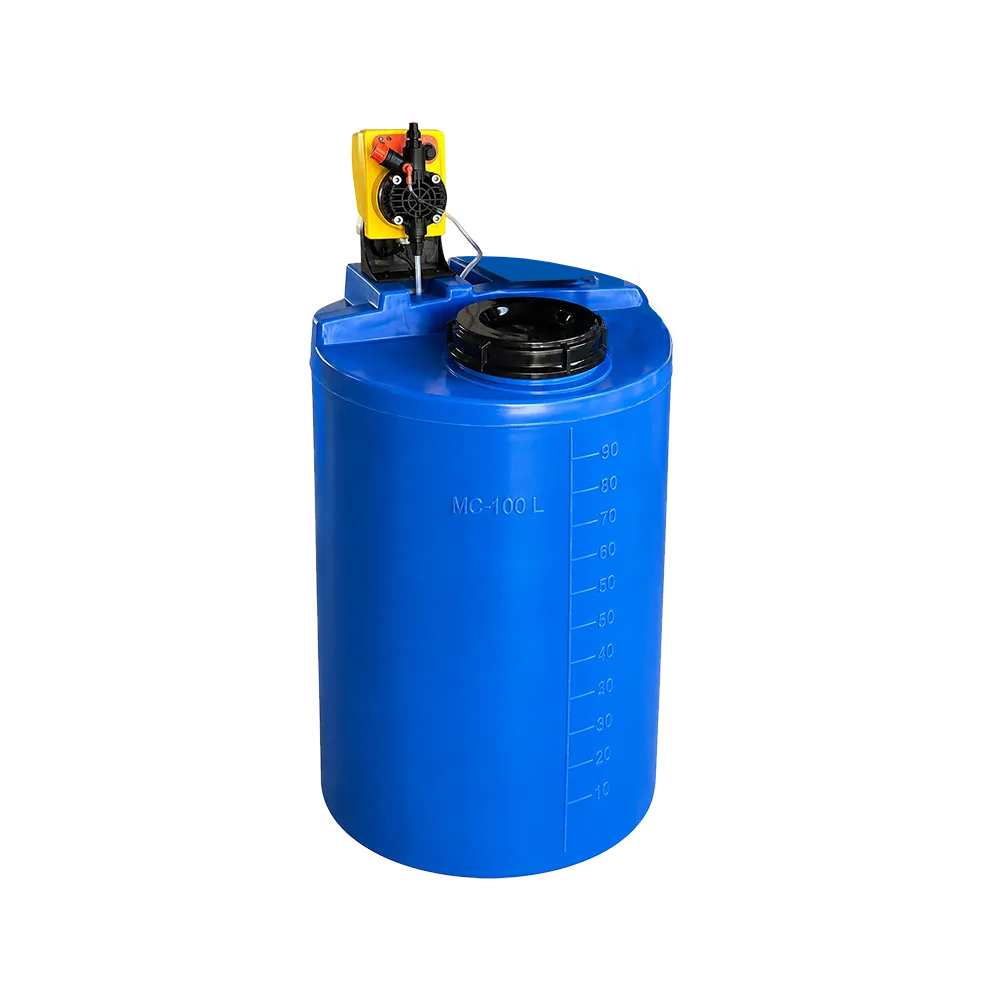
Chlorination kit: dosing pump and 100 L chemical tank to disinfect stored borehole, wellpoint or rainwater with sodium hypochlorite. Chemicals not included.
What it is for
Killing bacteria in stored water and keeping it safe in the tank. Untreated groundwater and rainwater can carry bacteria such as E. coli, and a storage tank gives them time to grow. Dosing sodium hypochlorite disinfects the water and leaves a small chlorine residual that keeps protecting it while it is stored.
How it works
Sodium hypochlorite (liquid chlorine) forms hypochlorous acid in water, a strong oxidant and disinfectant. The pump injects a set dose into the water as it flows into your tank. As a side benefit, the same chlorine also oxidises hydrogen sulphide (the rotten-egg smell) and some of the iron and manganese.
What’s included
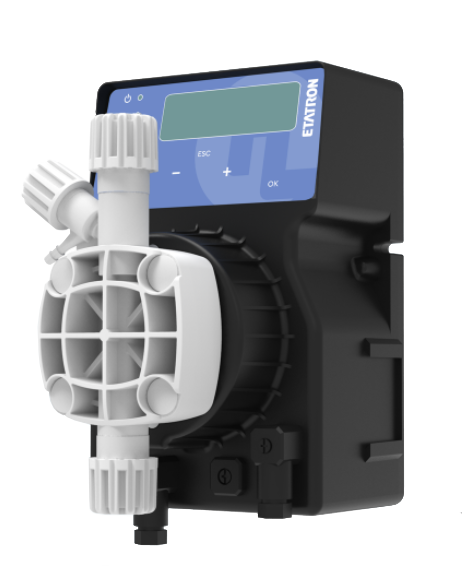
- Etatron PKX analogue dosing pump – solenoid diaphragm pump, output set by hand on the dial (1 L/h at 5 bar, up to 5 L/h at 7 bar), IP65, NSF certified. Supplied with its installation kit: 2 m discharge tube, 2 m suction and bleed tubes, foot filter and injection valve.
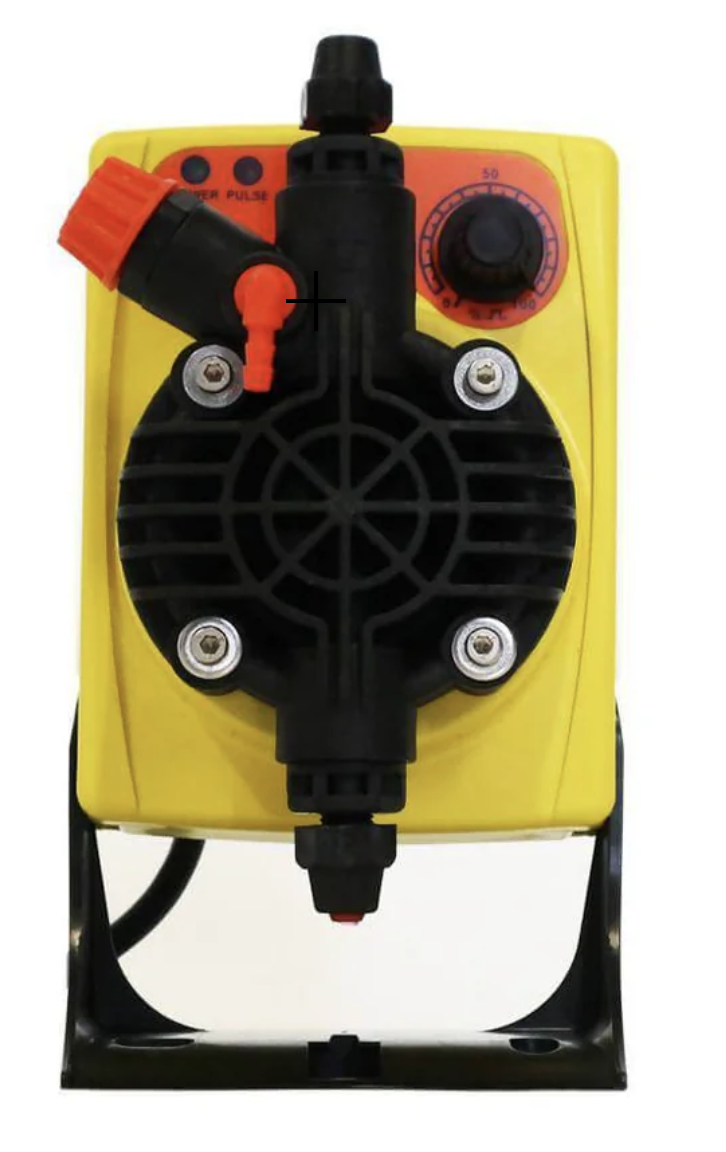
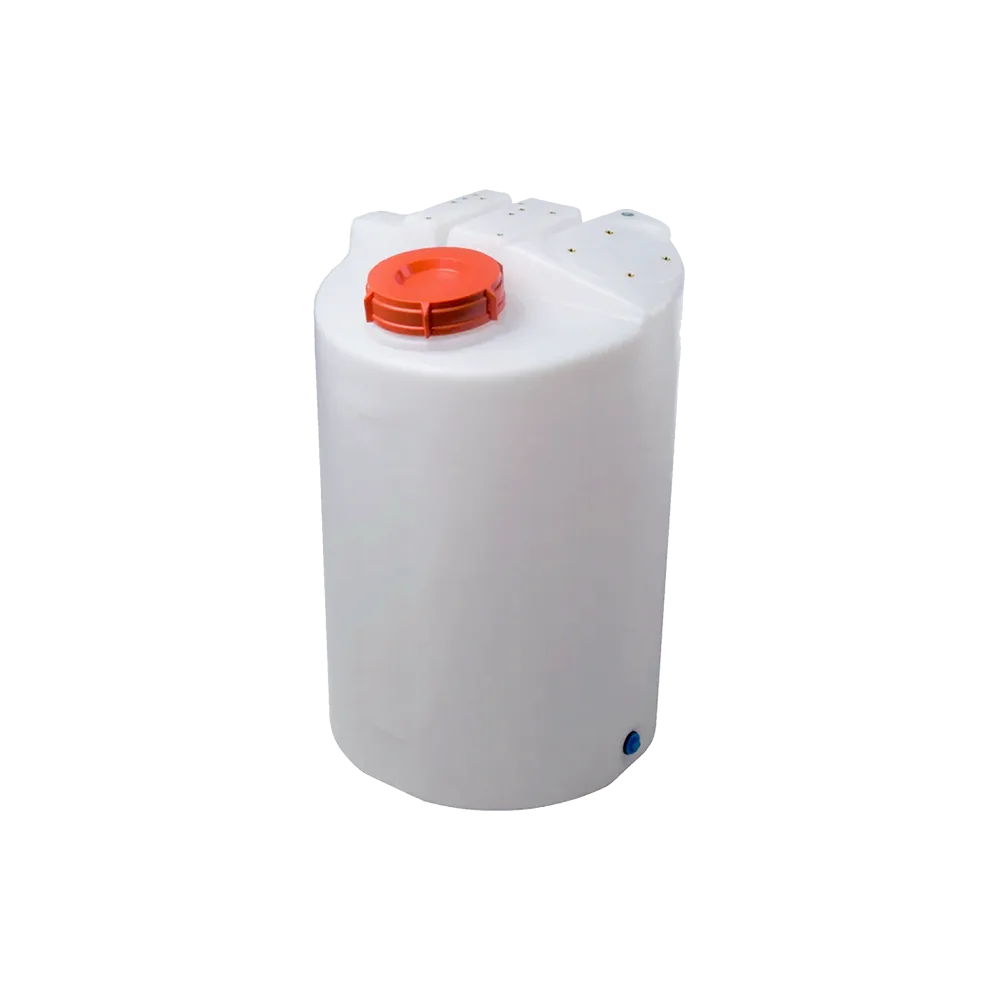
- 100 L chemical dosing tank – choose Blue for outdoor installation or Clear for indoor installation (lets you see the level at a glance).
Not included
- Sodium hypochlorite – we’ll recommend the right product and strength for your water.
- Why chemicals are separate: treatment chemicals are heavy and expensive to ship, so it is usually far cheaper to buy the recommended chemical from a supplier near you. We’ll tell you exactly which chemical and strength to buy, and it is also available from us as a separate product.
- Installation (available on request).
Getting it right
- Test the free chlorine in the tank regularly and keep it within the SANS 241 drinking-water limits.
- If you don’t want a chlorine taste at the tap, fit an activated carbon filter at the point of use.
- Is iron removal your main goal? See the NanoDose™ Iron Removal Dosing Kit (same equipment, set up and explained for iron and manganese).
Safety
Sodium hypochlorite is corrosive. Wear gloves and eye protection, store it out of direct sun and never mix it with acids or other chemicals.
| SKU | NDC-A-100L-0346 |
| Variant SKU | NDC-A-100L-0346-DEFAULT |
| Brand | CWT |
| Condition | New |
| Stock | In Stock (Unlimited) |
Reviews coming soon.