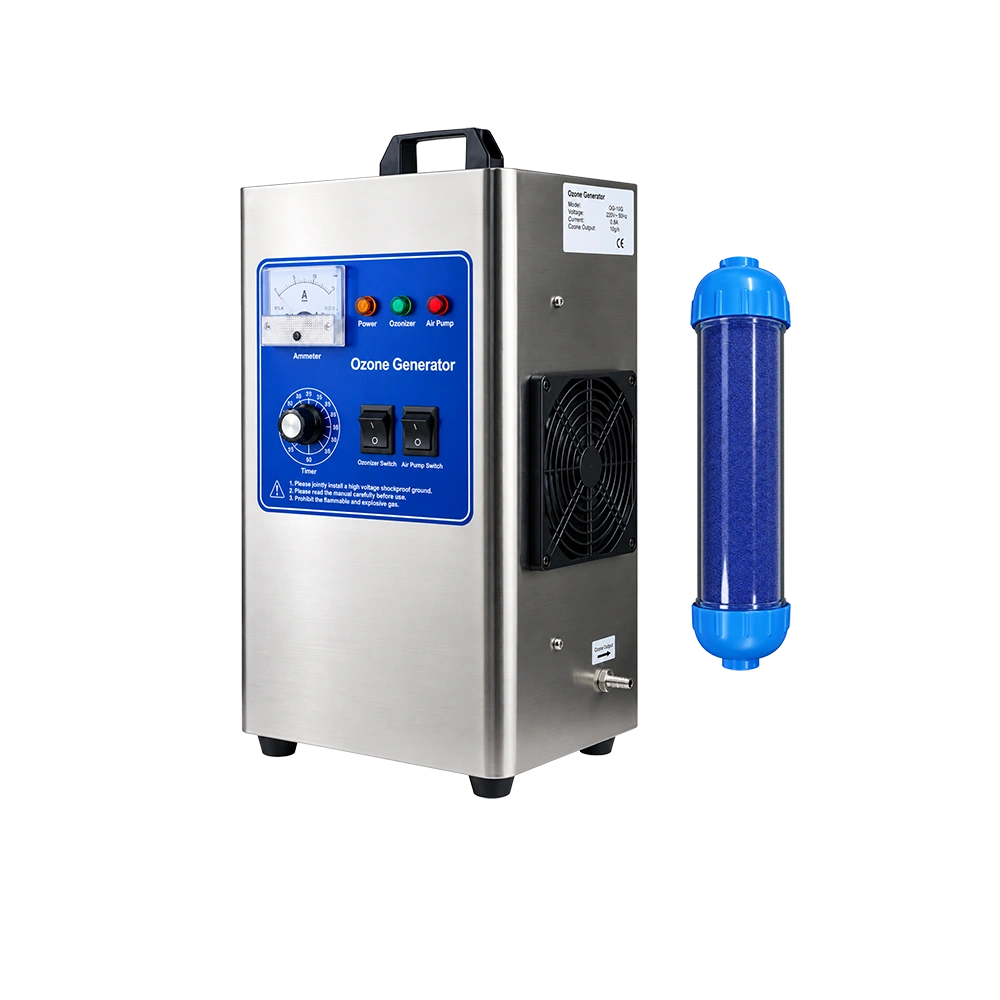
Ozone Generator, 3g/h, 201SS Enclosure
Iron (Fe) is most effectively oxidized and precipitated at a pH of 6.0 to 8.5, optimal near 7.5 to 8.5.
Manganese (Mn) requires a higher pH for complete conversion and stable removal, working best around pH 8.0 or higher (optimal range generally 7.5 to 8.0+).
Ozone oxidizes dissolved iron and manganese into solid particles within 1 to 10 minutes of contact time.
Requires 0.43 mg of ozone for every 1.0 mg of iron.
Ozone Generator, 3 g/h
Compact on-site ozone generator for iron and manganese oxidation and disinfection of borehole and wellpoint water.
What ozone does to your groundwater
Ozone (O3) is the strongest oxidant and disinfectant in everyday water treatment – considerably stronger than chlorine. It is made on site from air and electricity, does its work in the water within minutes, then breaks down back into ordinary oxygen.
- Oxidises iron: dissolved ferrous iron (Fe2+) is converted almost instantly into solid ferric particles that can be filtered out – ending orange staining on walls, paving, basins and laundry.
- Oxidises manganese: dissolved manganese is converted into solid manganese dioxide, ending black/brown staining and sediment.
- Kills bacteria and viruses: destroys E. coli and other bacteria and viruses on contact, and is more effective than chlorine against chlorine-resistant parasites such as Giardia and Cryptosporidium.
- Removes hydrogen sulphide: eliminates the rotten-egg smell common in borehole water.
- Improves taste, odour and colour: breaks down many of the organic compounds behind earthy or musty tastes and yellow/brown colour.
- Controls iron bacteria and biofilm: helps keep tanks, pipes and irrigation lines free of slime.
- Adds oxygen: as it breaks down, it raises the dissolved oxygen in the water.
- No chemicals: nothing to buy, transport, store or mix, and it adds no salts and does not change the TDS of your water.
- No residual taste or smell: ozone reverts to oxygen within minutes, so it leaves no chlorine-type taste.
This generator
A compact 3 g/h generator in a 201 stainless steel enclosure, suited to smaller tanks and lower iron, manganese or odour levels.
We size the generator to your water analysis – mainly the iron, manganese and hydrogen sulphide levels – and to your tank volume and daily water use. Send us your lab report and we’ll recommend the right size.
What’s included
- Ozone generator, 3 g/h, 201 stainless steel enclosure.
Choosing the right size
- 3 g/h – this unit: Small residential set-ups: low flow rates (up to a few hundred litres an hour, or a small household’s peak flow) and low iron, manganese, odour or bacteria levels.
- 5 g/h: Medium residential or light commercial use: higher flow rates, or moderately raised iron, manganese or bacteria levels.
- 10 g/h: Larger flow rates, continuous-run systems, or raw groundwater with heavy organic loads, sulphur (hydrogen sulphide) or high dissolved iron and manganese that need a strong oxidation reserve.
How size affects groundwater treatment
- Ozone demand: iron, manganese, hydrogen sulphide and micro-organisms in raw groundwater all use up ozone. A generator that is too small for the water’s load and volume is used up oxidising and leaves too little ozone to disinfect; a larger unit meets the demand and still has ozone to spare for disinfection.
- Flow rate: larger generators treat more litres per hour while keeping the dose and contact time the water needs.
- Mixing: the 5 and 10 g/h units need a proper mixing system – a venturi injector and contact tank, such as the NanoJet™ assembly – rather than a simple air stone, so the ozone dissolves into the water instead of escaping into the air.
Work it out yourself: our free Ozone Sizing Calculator estimates the ozone output your water needs from its iron and manganese levels and your flow. Or send us your lab report and we’ll size it for you.
Getting it right
- Mixing and contact: ozone works best injected through a venturi into a turbulent stream – the NanoJet™ reactor acts as a contact multiplier, making the ozone dose oxidise faster and more completely.
- Filtration after it: ozone turns dissolved iron and manganese into particles – they must then be filtered out, for example with the NanoJet™ STANDARD Iron & Sludge Removal Kit, which captures them in an AFM® glass filter and backwashes them out to waste on a timer.
- pH: iron oxidation typically needs pH 7.0 or higher and manganese a higher pH of around 7.2–8.5. Correct acidic water first with a NanoDose™ pH Control Dosing Kit.
- Dose control: run the generator on a cyclic timer matched to your tank turnover. Too much ozone with manganese can briefly turn water pink (permanganate), so the dose is matched to your water analysis.
- No lasting residual: because ozone disappears within minutes, it doesn’t keep protecting water that is stored for a long time. Where that matters, add a small chlorine residual or UV at the point of use.
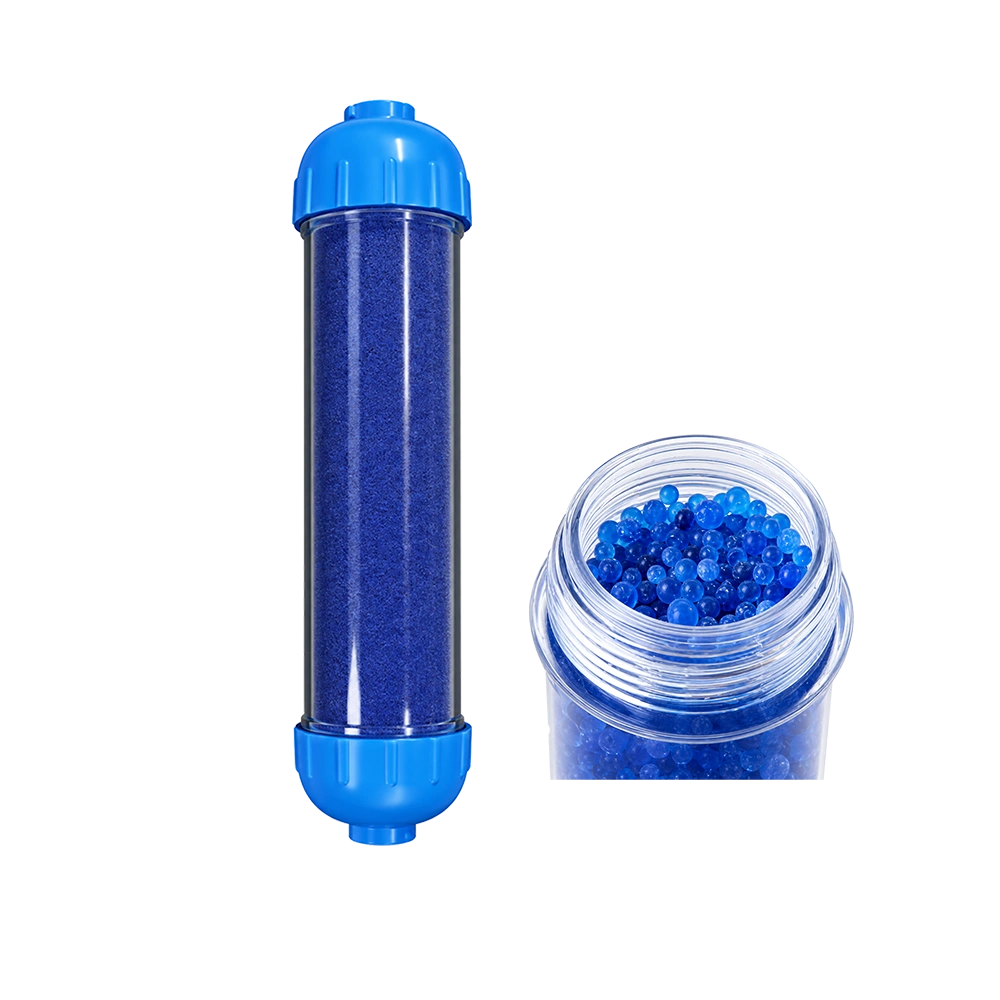
- Dry air: a dryer on the air feed gives more ozone output and protects the generator from moisture.
Safety
Ozone gas is harmful to breathe. Install the generator in a dry, well-ventilated area, vent the treated tank, and never breathe the gas from the outlet. The unit must be kept dry and out of direct rain.
| SKU | OGS-B-3g/h-0216 |
| Variant SKU | OGS-B-3g/h-0216-DEFAULT |
| Brand | CWT |
| Condition | New |
| Stock | In Stock (Unlimited) |
Reviews coming soon.