NanoDose™ Standalone Flocculation Kit
This System Includes
Flocculation Chemical
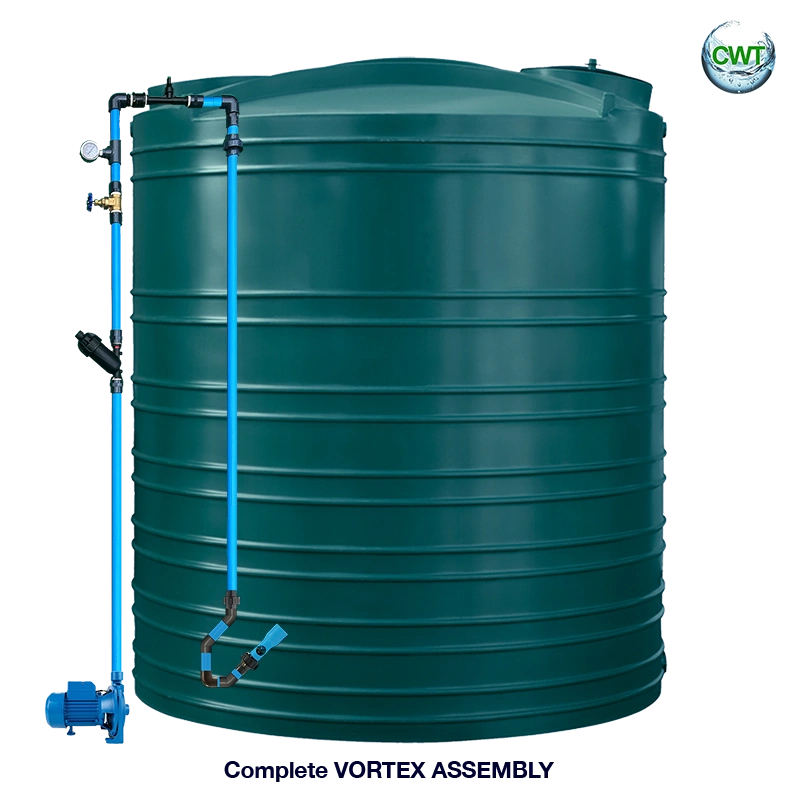
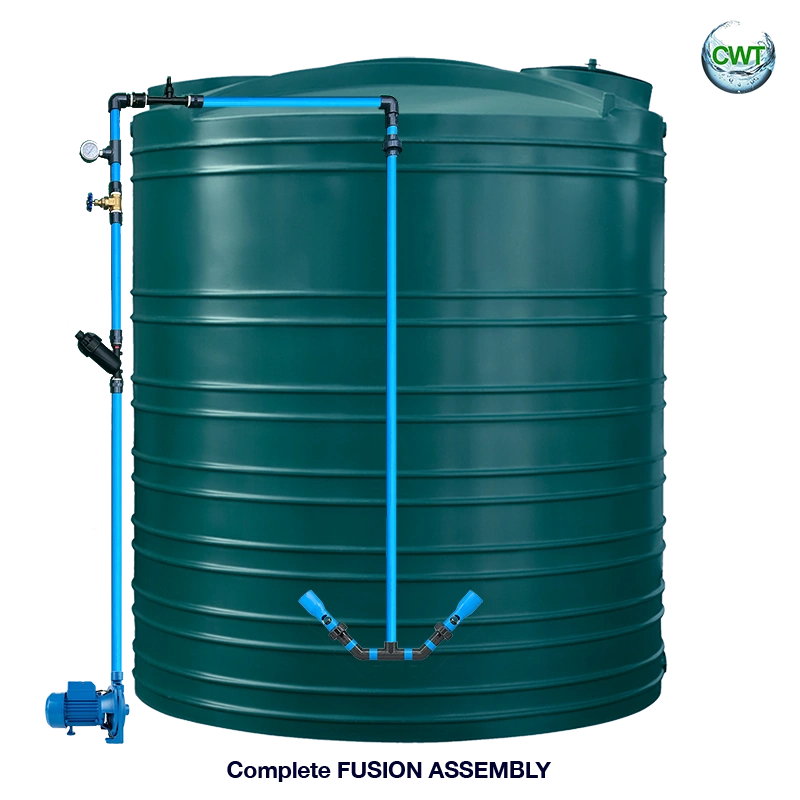
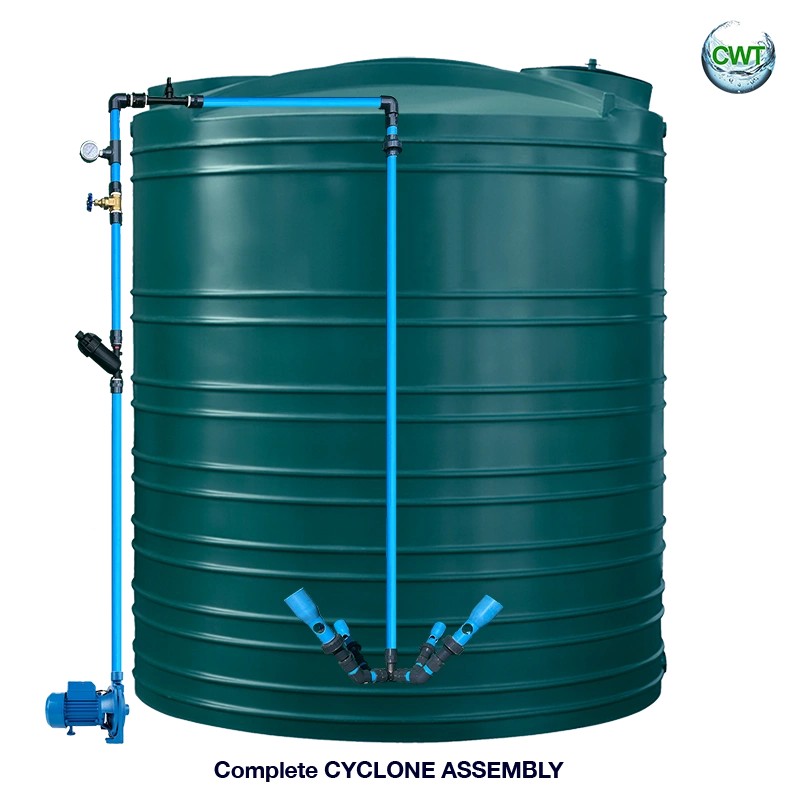
NanoJet Assembly Option
Dosing Tank Colour
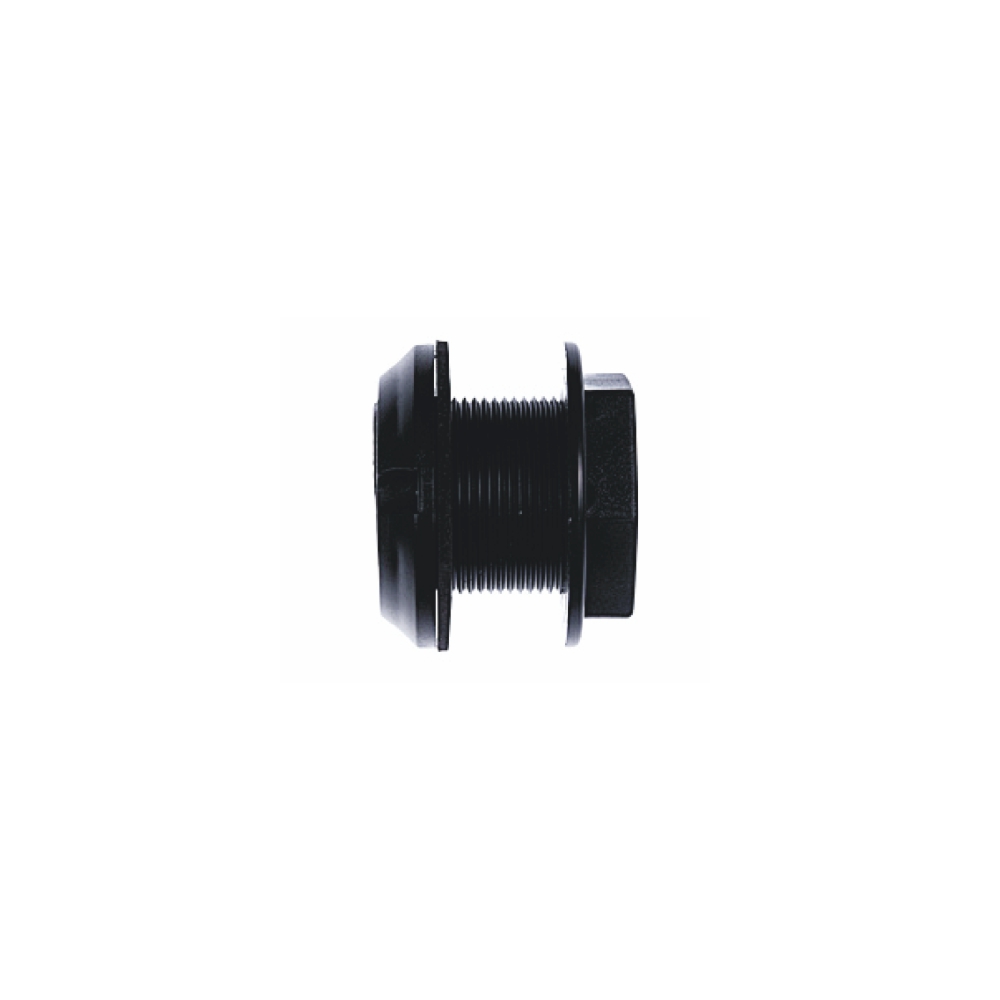
Tank Connectors
NanoDose™ Standalone Flocculation Kit
The Complete Alum Dosing Solution: Simplicity, Accuracy, and Efficiency in One Package
Take the complexity out of water treatment with our pre-manufactured, ready-to-integrate flocculation kit. Designed for precise dosing of aluminium sulfate (alum) or other flocculants, this compact system delivers professional-grade coagulation and flocculation in an easy-to-manage package.
How It Works: A Two-Step Process
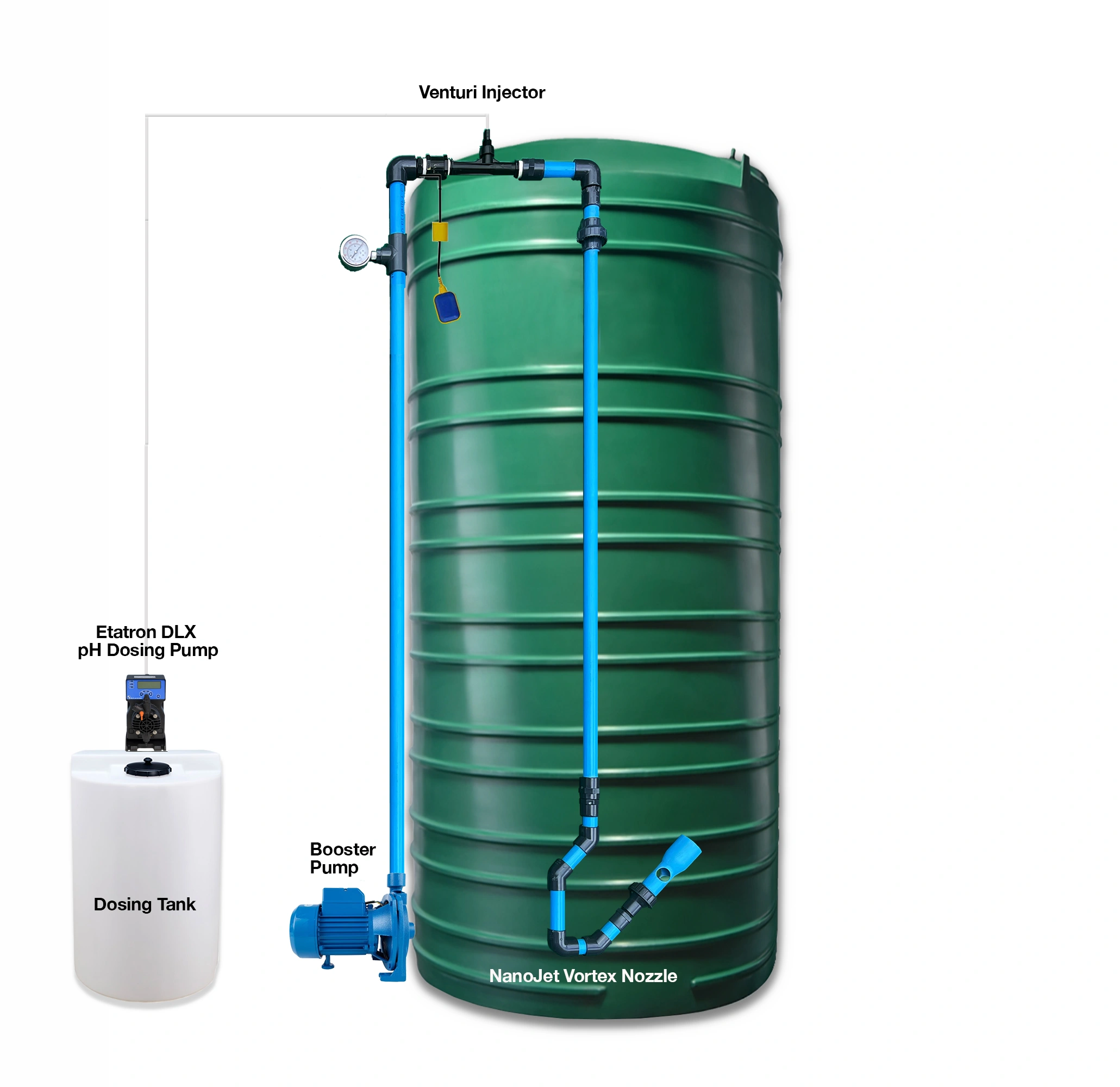
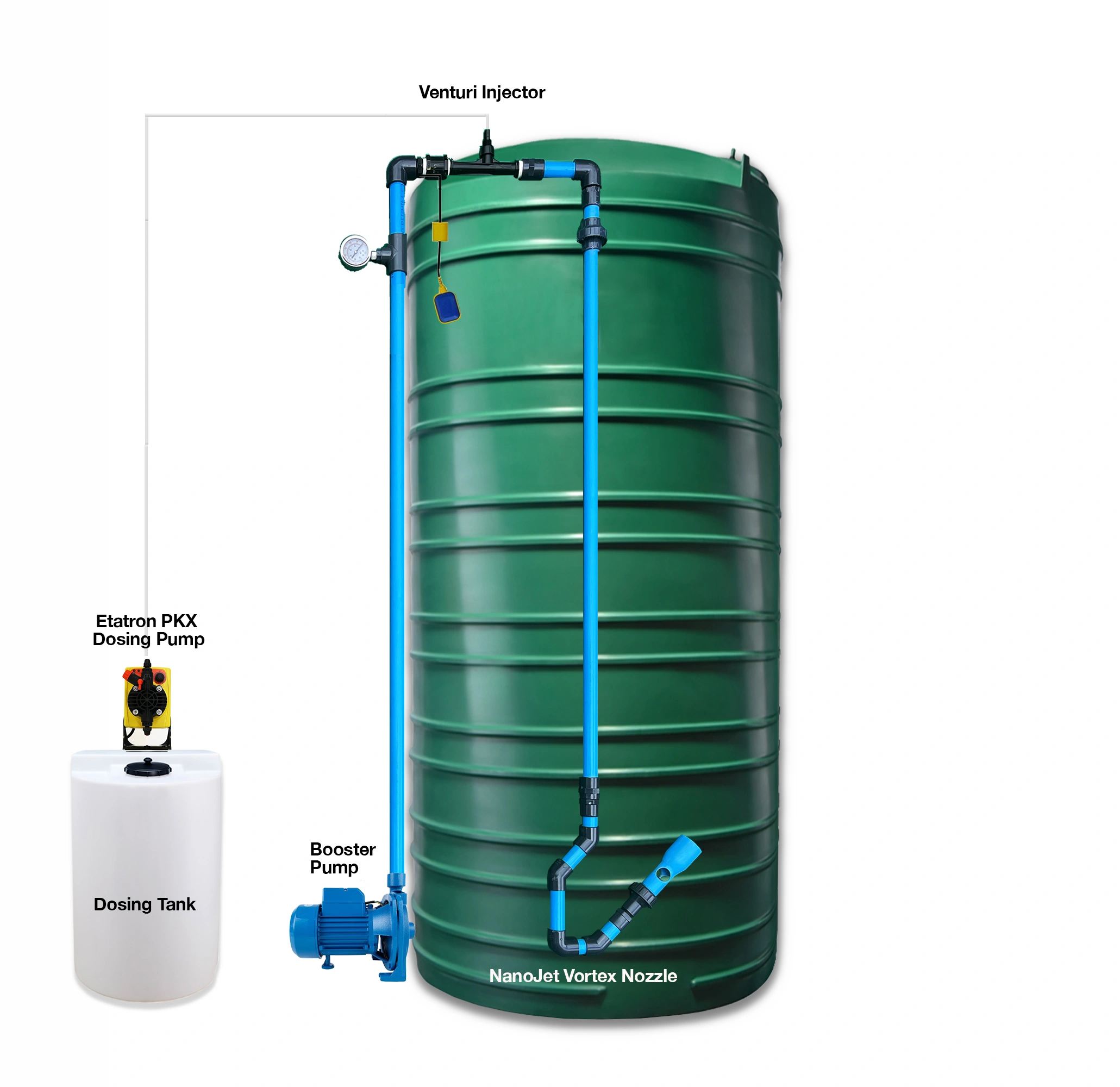
1. Coagulation (The Set-Up): After oxidation, raw groundwater contains tiny, suspended particles that repel each other. Our system injects a coagulant (like alum) under high velocity via a Venturi injector. This rapid mixing neutralizes the particles’ electrical charges, causing them to lose stability and form microscopic clusters.
2. Flocculation (The Clump): Gentle, controlled turbulence within the tank (created by the NanoJet Reactor Nozzle) encourages these microscopic clusters to collide and stick together. They grow into larger, heavier clumps called “flocs,” which are now heavy enough to be easily filtered out—perfect for pairing with an AFM Activated Glass Filter.
What’s Included in the Kit:
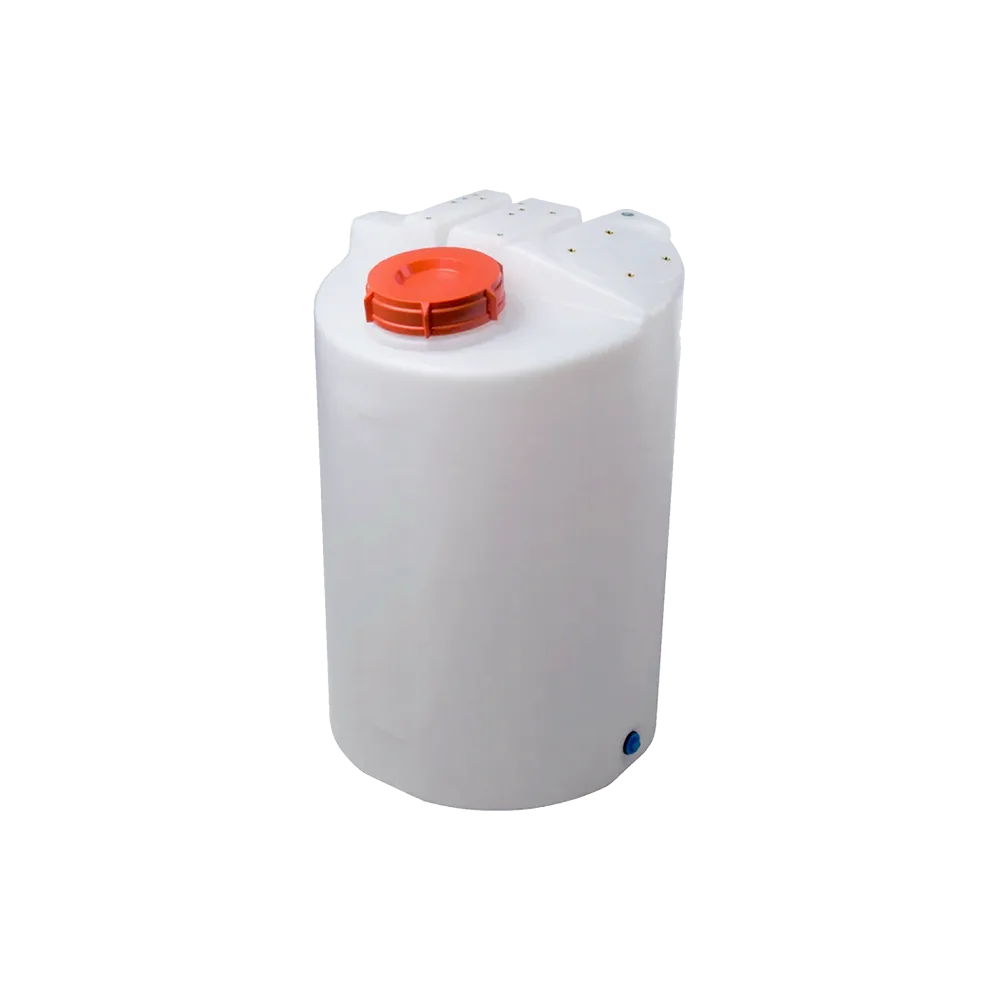
- The Dosing & Prep Tank (100L): The central reservoir for preparing your alum solution, ensuring a steady, on-demand supply of coagulant.
- The Circulation Pump: A centrifugal pump that continuously mixes the flocculant in the tank, preventing settling and keeping the precipitate perfectly suspended for consistent floc formation.
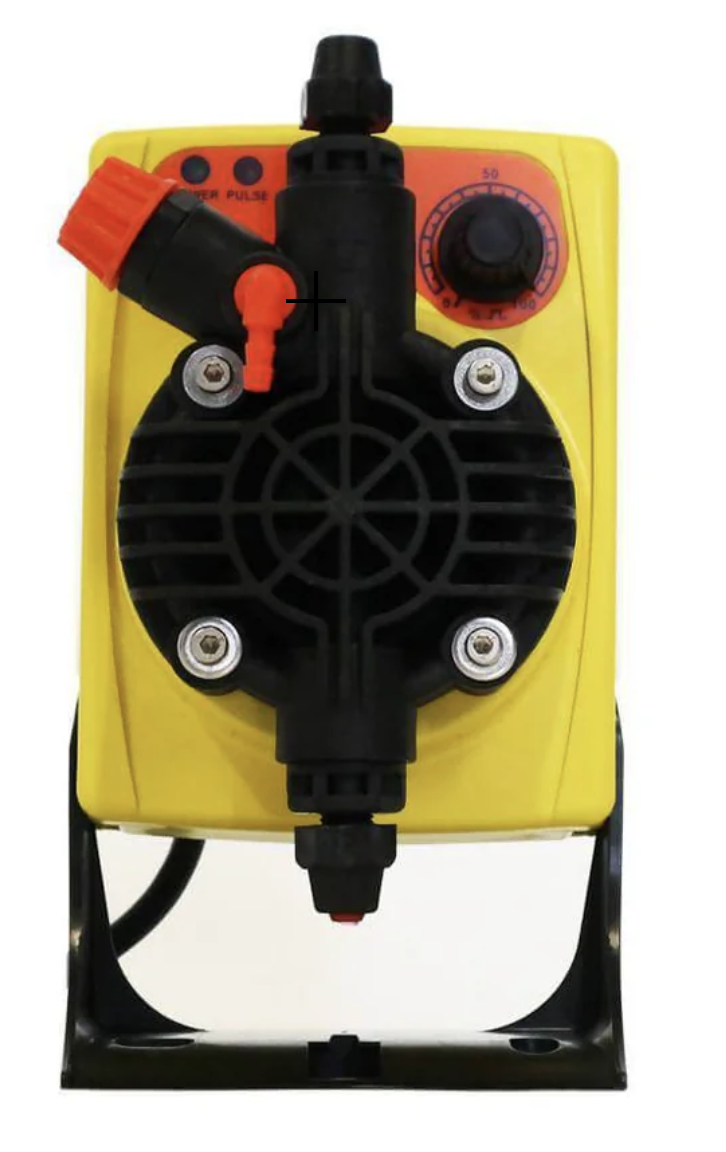
- The Precision Dosing Pump: Engineered for reliability, this pump meters the exact amount of chemical from the tank into your raw water stream—eliminating guesswork and costly chemical waste.
- The NanoJet™ Assembly: The heart of the system. It transforms the alum solution into a finely atomized jet, ensuring instant, thorough mixing with your raw water for faster, clearer results than traditional dosing methods.
Why Choose the NanoDose™ Kit?
- Standalone & Ready: A complete, integrated system that simplifies installation and reduces on-site engineering.
- Cost-Effective: Precision dosing and efficient mixing minimize chemical consumption, saving you money.
- Reliable & Low-Maintenance: Built with durable, corrosion-resistant materials for long-term service. (Adding an AFM filter creates a self-cleaning contact tank, automating sludge removal).
- Superior Water Quality: Achieve consistent, high-quality flocculation for clearer, better-treated water.
Chemical Description of Alum
Chemical Name: Aluminium sulfate (commonly referred to as "alum" in water treatment).
Formula: Al₂(SO₄)₃ · 14H₂O (often hydrated; the most common form is octadecahydrate, Al₂(SO₄)₃ · 18H₂O).
Appearance: White or off-white crystalline solid or powder.
Role in Water Treatment:
Alum is a coagulant. When added to raw water, it dissociates into aluminium ions (Al³⁺) and sulfate ions. These positively charged aluminium ions rapidly neutralize the negative electrical charges on suspended particles (clay, silt, and organic matter). This neutralization allows the particles to clump together. Additionally, alum reacts with the water's natural alkalinity (bicarbonates) to form a gelatinous precipitate called aluminium hydroxide (Al(OH)₃). This sticky, heavy floc captures fine particles and impurities as it settles, effectively clarifying the water.
Key Properties:
- Highly soluble in water.
- Effective across a wide pH range (optimal performance usually between pH 6.0 and 7.5).
- Non-combustible and stable under normal storage conditions.
- Corrosive to metals in the presence of moisture; requires compatible (plastic or stainless steel) dosing equipment.
Step-by-Step Guide: Preparing an Alum Dilution for a 100L Dosing Tank
This guide covers preparing an alum solution from dry alum powder or liquid alum concentrate. Always work in a well-ventilated area and consult your alum supplier's Safety Data Sheet (SDS) before starting.
Before You Begin: Critical Safety Precautions
Alum is an acidic salt that poses significant health and safety risks if mishandled .
Personal Protective Equipment (PPE) - MANDATORY:
- Eye Protection:Chemical splash goggles and a full-face shield .
- Respiratory Protection: A respirator (dust mask for dry alum, appropriate cartridge for mist/vapour) to avoid inhaling dust or spray .
- Skin Protection: Acid-resistant gloves (e.g., neoprene or nitrile) and a full-body protective suit or slicker suit .
- Footwear: Chemical-resistant boots.
Engineering & Workspace Controls:
Ventilation:Work outdoors or in a well-ventilated area to avoid breathing dust, mist, or vapours .
Spill Response: Have an absorbent spill kit and diking materials ready. Do not allow spills to enter drains or water courses .
First Aid:Immediately flush any skin or eye contact with copious amounts of clean water for at least 15 minutes. If ingested, **do NOT induce vomiting**—rinse mouth and seek medical attention immediately .
Step 1: Determine Your Target Concentration
You will need to calculate the volume of concentrated alum required to achieve your desired working solution strength. A common stock solution for water treatment is a 1.0% by weightsolution. This means every 1 mL of stock solution added to 1 litre of water provides a dose of 10 mg/L (ppm) .
For this guide, we will prepare a 1.0% (10 g/L) solution for a 100-litre tank.
Step 2: Prepare the 100L Dosing Tank
- Inspect the Tank: Ensure the 100L tank is clean and free of debris. Check that all valves and connections are closed.
- Add Dilution Water: Fill the tank approximately **70-80% full** with the water you will be treating. Using the same source water for dilution is recommended to ensure consistency .
- Start Agitation: Turn on the circulation pump or mixer to create a gentle but consistent vortex. This is crucial for dissolving the alum evenly and preventing the formation of clumps .
Step 3: Calculate the Required Alum Quantity
If Using Dry Alum (Powder/Granules)
To make a 1.0% (10 g/L) solution, you need **10 grams of dry alum for every 1 litre of final solution .
For 100 Litres:
`100 L × 10 g/L = 1000 grams` (1 kg) of dry alum.
If Using Liquid Alum (Concentrate)
- Liquid alum is typically sold at a concentration of about 48.5% dry alum with a specific gravity of approximately 1.335
- To make a 1.0% (10 g/L) solution, you need approximately 15.4 mL of liquid concentrate for every 1 litre of final solution .
For 100 Litres:
`100 L × 15.4 mL/L = 1540 mL` (1.54 litres) of liquid alum concentrate.
Step 4: Mixing Procedure
Procedure for Dry Alum:
- Slow Addition: With the mixer running, slowly and carefully add the pre-weighed 1 kg of dry alum powder directly into the vortex of the water in the tank. Do not dump the entire amount at once, as this can cause clumping .
- Avoid Dust: Pour gently to minimise the creation of irritating dust.
- Complete Dissolution: Continue mixing for 30-60 minutes to ensure all dry alum is fully dissolved, creating a clear solution. There should be no visible particles or "fish-eyes" remaining .
Procedure for Liquid Alum:
- Add Concentrate: With the mixer running, slowly pour the pre-measured 1.54 litres of liquid alum concentrate into the vortex.
- Thorough Mixing:Continue mixing for at least 15-20 minutes to ensure the solution is fully homogenised throughout the tank.
Step 5: Finalise the Solution
- Top Up: After the alum is fully dissolved/mixed, turn off the mixer and add more dilution water to bring the total volume in the tank to the 100L mark.
- Mix Again: Turn the mixer back on for a final 5-10 minutes to ensure the entire batch is uniform.
- Ready: The solution is now ready for your precision dosing pump to deliver the required amount to your raw groundwater stream.
Step 6: Clean-Up and Storage
Clean Equipment Immediately: Alum solution is corrosive to ferrous metals . Rinse any spills or splashes from equipment surfaces immediately with water.
Safely Store Alum: Store dry alum in a cool, dry place, and keep containers tightly closed. Liquid alum concentrate should be stored in corrosion-resistant containers (e.g., 316 stainless steel, fibreglass, or HDPE) and kept above 25°F (-4°C) to prevent crystallisation .
Dispose of Waste: Clean up any dry spills and dispose of material in accordance with local regulations. Do not return spilled material to the container .
| SKU | NDS-A-1-0339 |
| Variant SKU | NDS-A-1-0339-DEFAULT |
| Brand | CWT |
| Condition | New |
| Stock | In Stock (Unlimited) |
Reviews coming soon.